
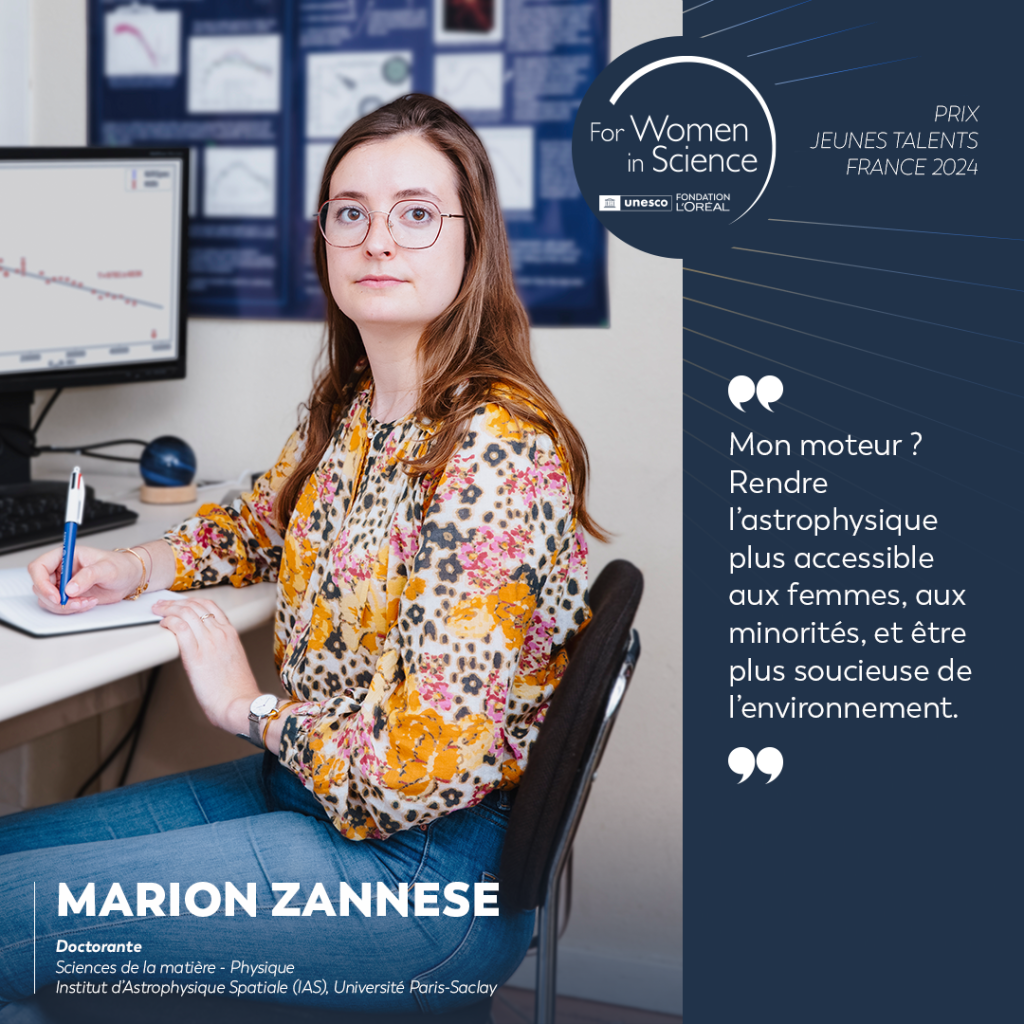
Marion Zannese: PhD and recipient of the 2024 L'Oréal-UNESCO For Women in Science Young Talents Award
Congratulations to Marion Zannese for winning the 2024 L'Oréal-UNESCO For Women in Science France Young Talents Award!
Congratulations to Marion Zannese for winning the 2024 L'Oréal-UNESCO For Women in Science France Young Talents Award!
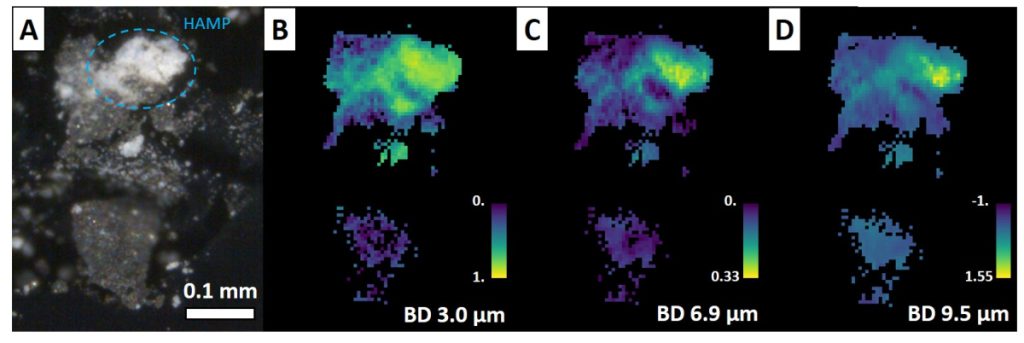
A team of scientists from the IAS has identified a phase of ammonium-rich phyllosilicates (NH4+) in samples collected from the surfaces of two asteroids, Ryugu and Bennu. This is a first for this type of extraterrestrial material. This discovery, published in Nature Communications, demonstrates that ammonium is a key link in nitrogen chemistry for all so-called "primitive" small bodies, whether carbonaceous asteroids or comets.
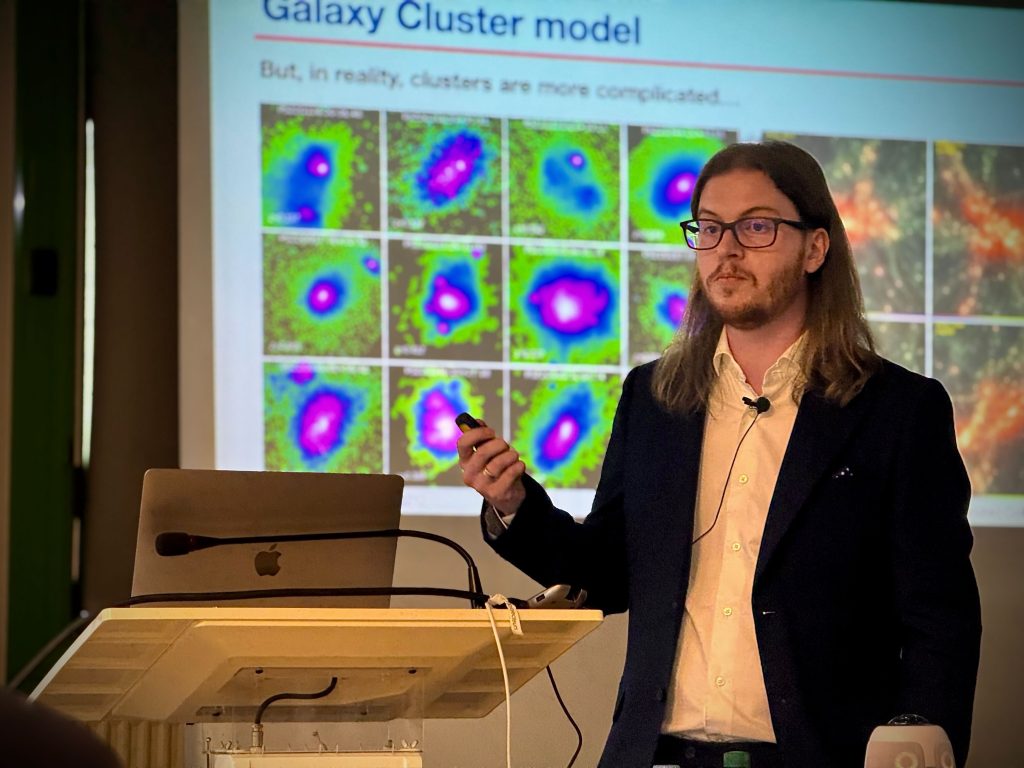
Stefano Gallo, from the Cosmology team, successfully defended his thesis entitled "On Galaxy Cluster modelling in the context of Cosmological analyses", carried out under the supervision of Nabila Aghanim and Marian Douspis.
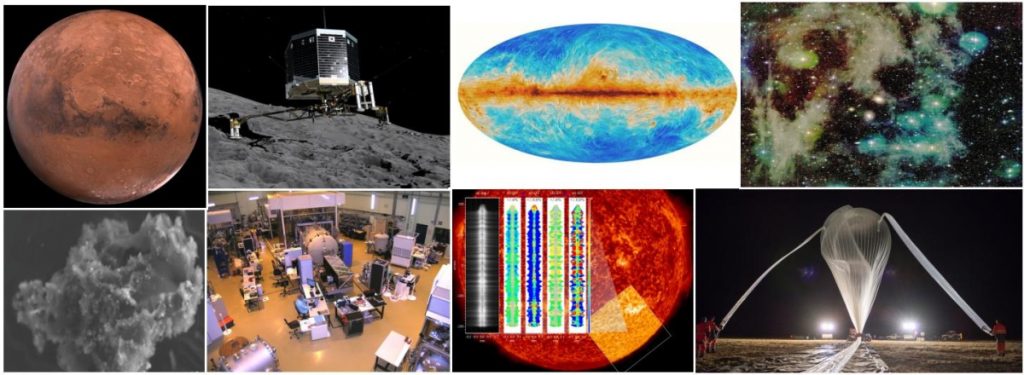
As part of the Fête de la Science (Science Festival), IAS will open its doors to the public on Sunday, October 6, 2024, from 2:00 PM to 6:00 PM.

On May 28, 2024, CNES officially confirmed the transition to Phase A for the BISOU stratospheric balloon project.
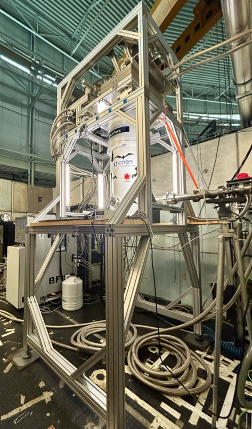
For its second campaign at the ALTO particle accelerator, the DRACuLA system enabled the testing of prototype detectors for the HFT instrument of the upcoming LiteBIRD space mission.
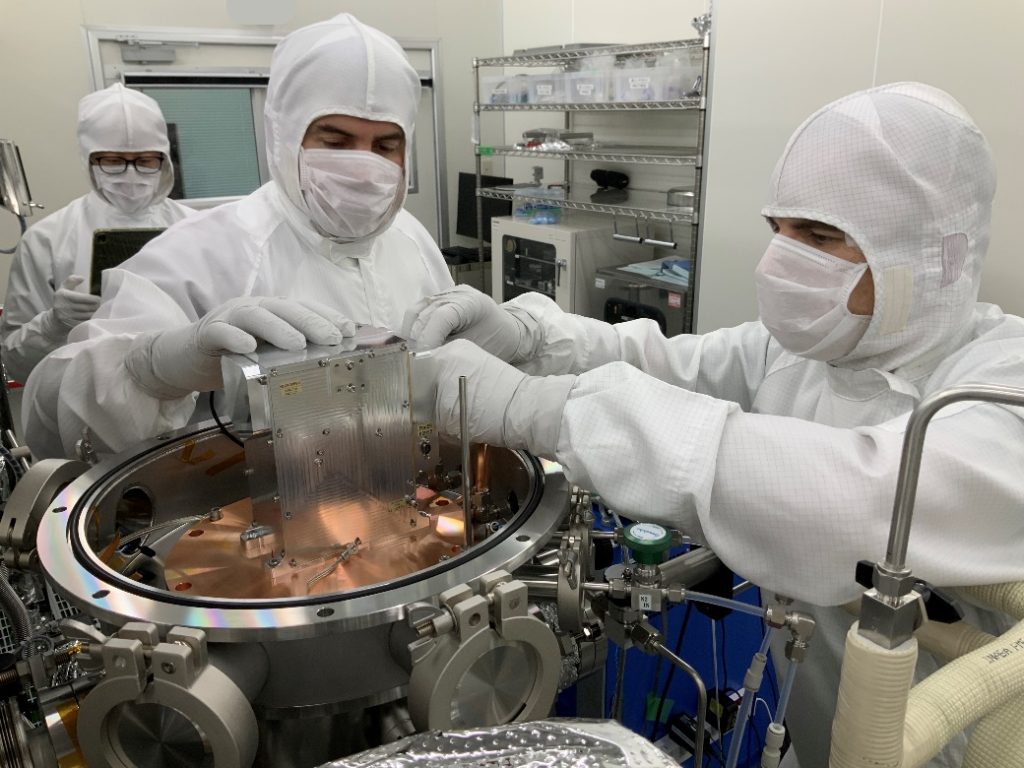
Since December 2020, the MicrOmega near-infrared hyperspectral microscope, developed by IAS, has been contributing to the analysis of samples from the carbonaceous asteroid Ryugu, brought back to Earth by JAXA's Hayabusa2 mission.
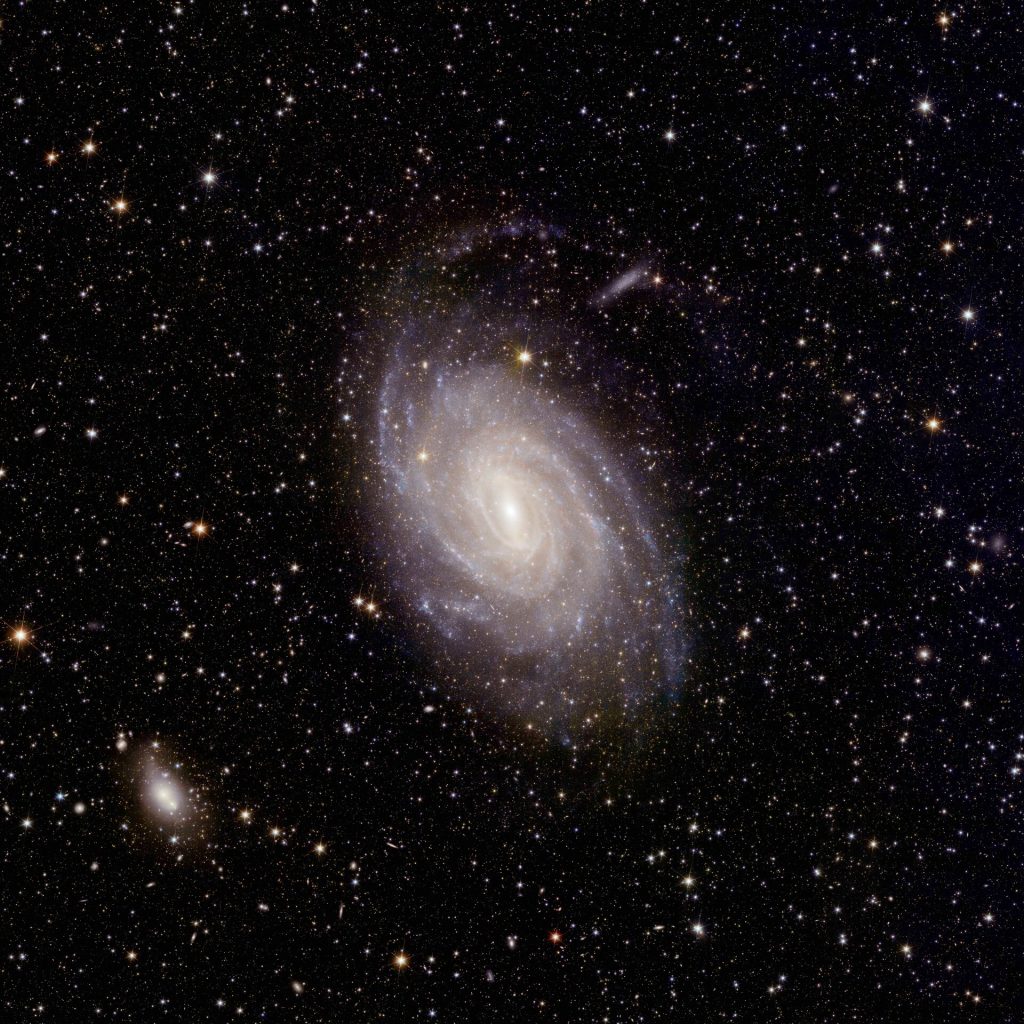
The first scientific results from Euclid, the European Space Agency's cosmology space mission, were unveiled on Thursday, May 23, 2024: 15 scientific papers, including 5 general papers on the space mission, its instruments, and data processing, and 10 on the initial astrophysical observations.
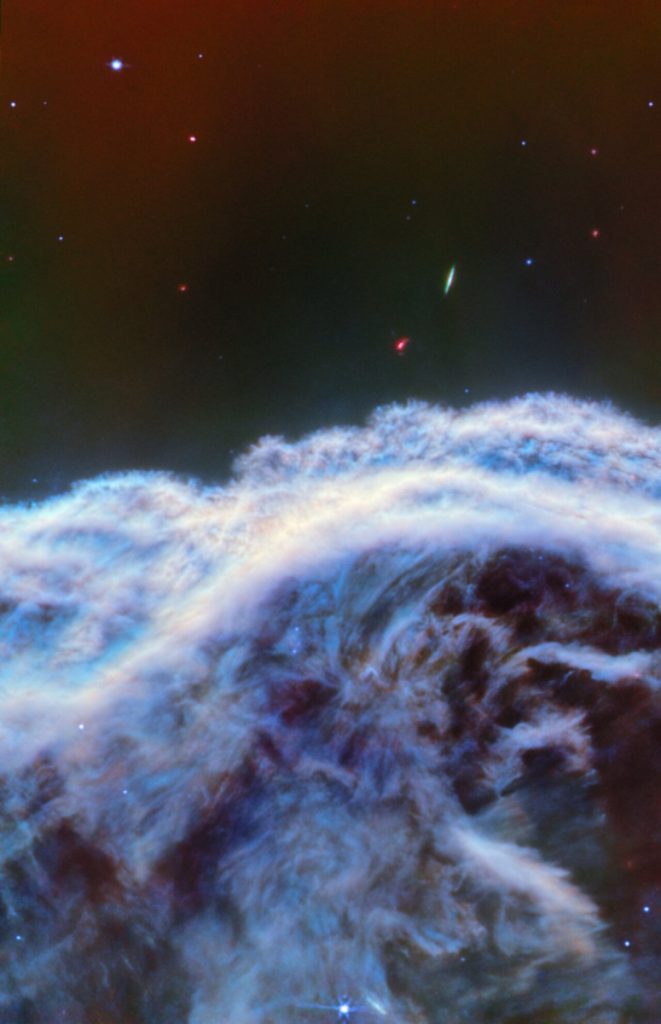
The Horsehead Nebula was discovered in the visible spectrum as a dark cloud appearing in extinction at the edge of a giant molecular complex in Orion.
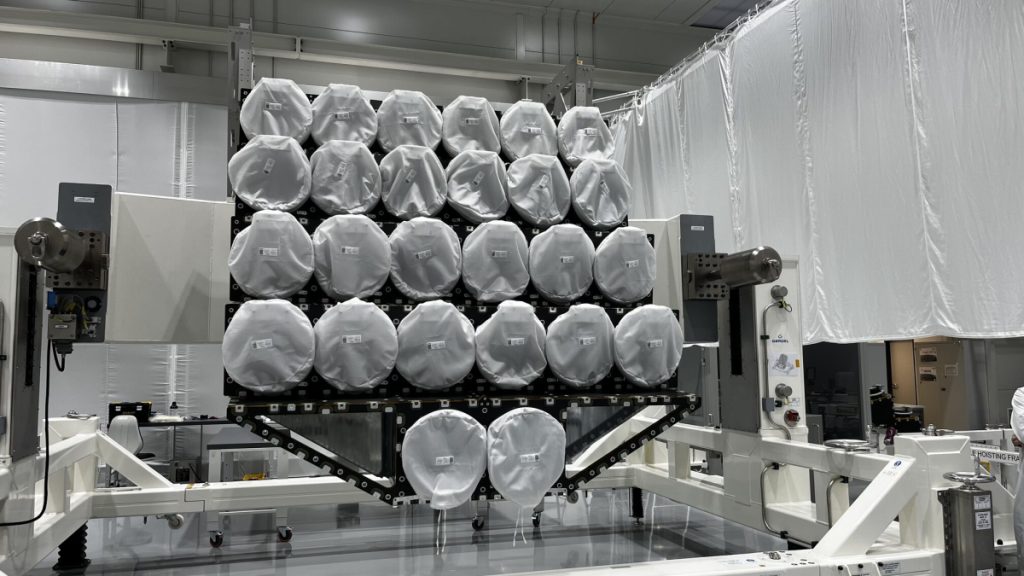
How many Earth-like planets orbit within the habitable zone of solar-type stars?