
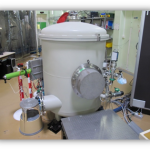
JUPITER
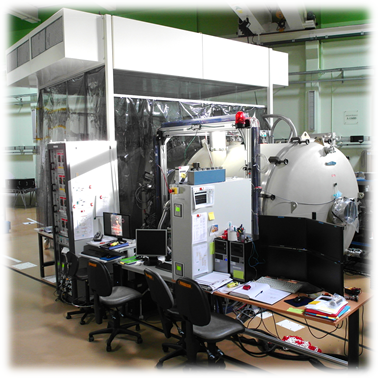
MERCURY
URANUS
Calibration Station
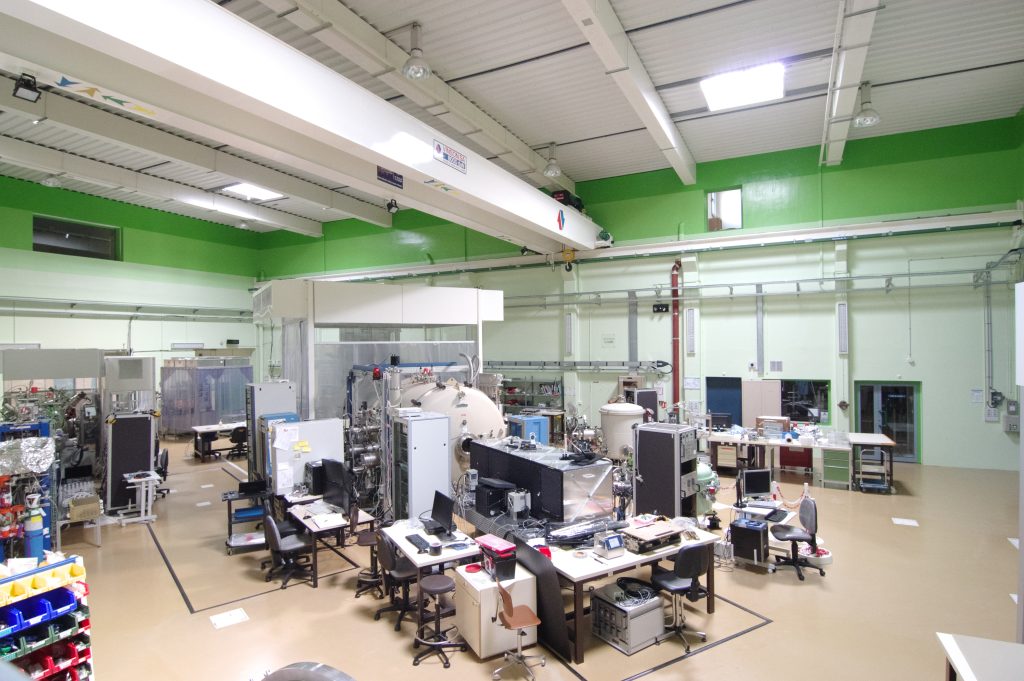
The Institute of Space Astrophysics operates a Calibration Station that is available to the entire scientific community and to industry. As a national facility, it houses specialized equipment and facilities for testing and calibrating onboard instruments and space equipment in a space environment. The Calibration Station is a node of the PARADISE Research Infrastructure.
Among the successive phases that mark the life cycle of a project, the final step to be performed on a space instrument before delivery to an agency (ESA, NASA, etc.) for integration into a satellite or space probe is calibration.
Its purpose is to verify the instrument’s operational functionality by placing it in environmental conditions similar to those it will encounter in space (vacuum, temperature), exposing it to known radiation whose wavelength and intensity are tailored to its operating range (thereby simulating the observations it will be called upon to make), and recording the electrical signals it emits.
The relationship established between the input luminous flux and the emitted signal allows us to perform part of the calibration.
Understanding of the instrument is supplemented by measurements taken by varying certain parameters, such as its temperature, wavelength, intensity, or the angle of incidence of the input beam. It is also necessary to ensure that the various operations and measurement sequences the instrument is designed to perform proceed automatically without a hitch.
Former team members:
Directors
,Philippe Salvetat (founding director, 1987–1999), Charles Carabetian (1999–2004), André Chardin (2004–2017), Paul Lami (2017–2025)
Staff
,Daniel Parisot, Gérard Michaux, Michel Lefebvre, Romain Jeannette, Thierry Redon, André Limongi, Jérémie Hansotte
The station team sets up the testing equipment and facilities needed for environmental testing:
All vacuum chambers are equipped identically:
– Temperature acquisition using thermocouples and platinum (Pt100) sensors
– Pressure acquisition
– Automatic cycle programming
– RGA
– Tracking of operations on web pages
The Jupiter simulator is a large chamber where space environment simulation tests can last from 3 weeks to 2 months. For example, it houses mirrors and electronic circuit boards to evaluate their resistance to low temperatures.
Mercure is an empty stainless-steel chamber equipped with pumping systems capable of reaching 10⁻⁷ mBar . It features several pumping systems (primary pump, turbomolecular pumps, cryogenic pumps).
It includes cooling systems (liquid nitrogen at -196 °C, compressed helium) and heating systems (electric current).