
Comments
Observations, Tools & Teaching
IAS faculty members are actively involved inexperimental astrophysics education, particularly through two observatories located on the Orsay Campus that began operations in early 2006:
1- TheRAMEAU radio telescopearray,operatingat 10 GHz and located in Building 333
2- the 35-cm-diameteroptical telescope, located under the dome of Building 470
These two observatories are used in astrophysics electives for the L2, M1, and M2 Pro programs.
The IAS also participates in the internship at the Haute Provence Observatory for Master’s 2 students in Astronomy, Astrophysics, and Space Engineering from the Île-de-France region.
Finally, the IAS plays an active role in teaching signal processing, particularly through an introduction to the IDL programming language.
Contact: Hervé Dole
The RAMEAU Radio Telescopes
- 10 small radio telescopes, each 80 cm in diameter, that observe the Sun and the Moon regardless of the weather;
- 1 large radio telescope, 1.80 meters in diameter, not yet installed.
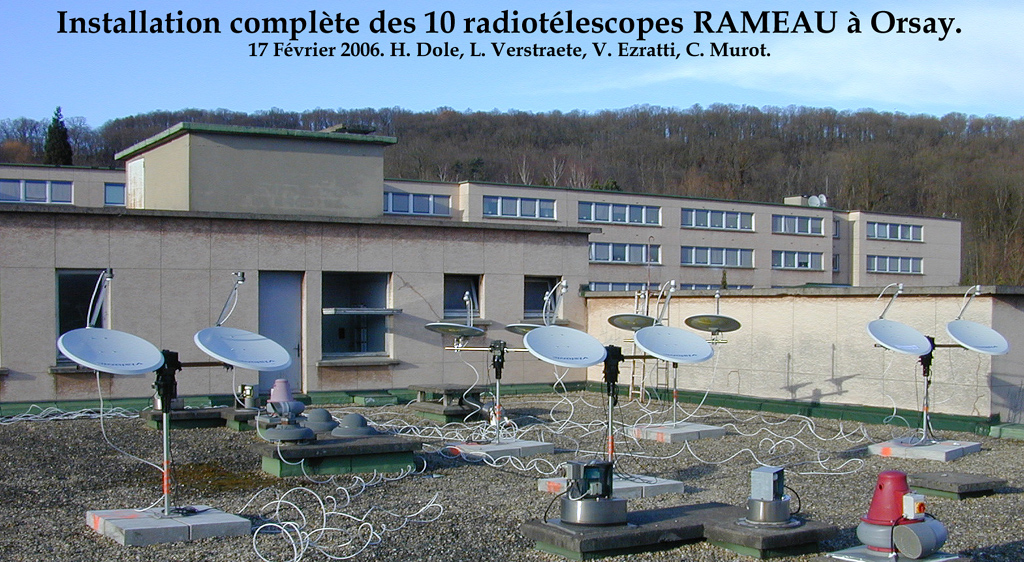
Credit: H. Dole, 2006
The Dome of Building 470
Leaders: Hervé Dole, Mathieu Vincendon.
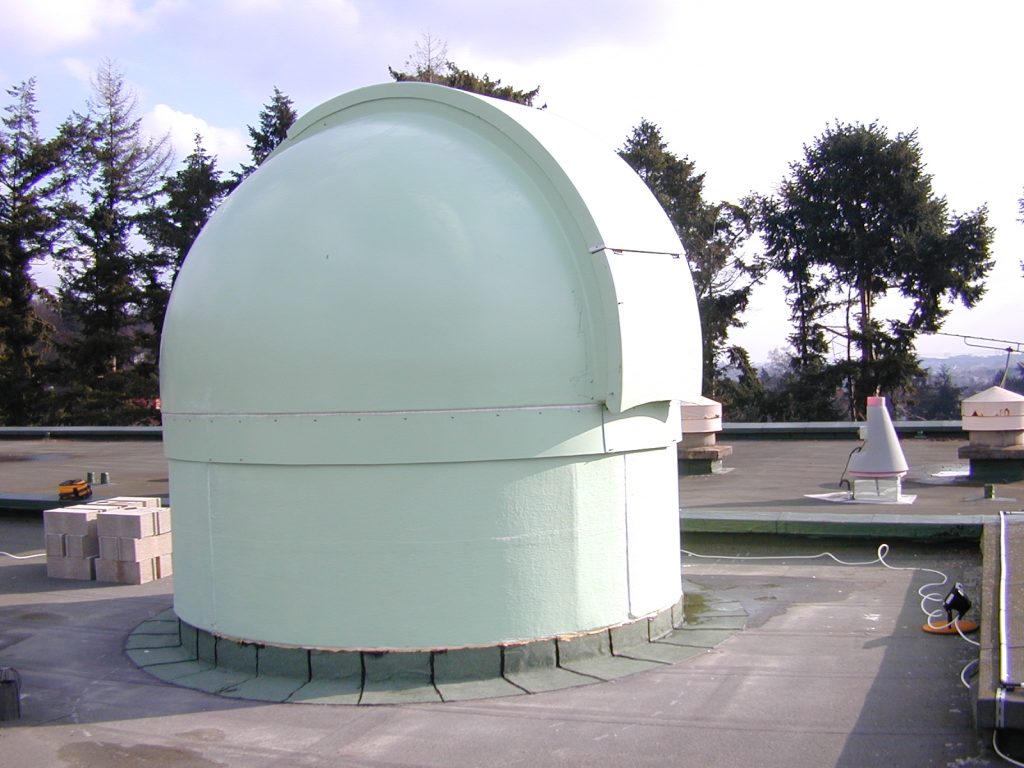
Credit: H. Dole, 2005