
Bachelor's Degree
Courses directly related to astrophysics
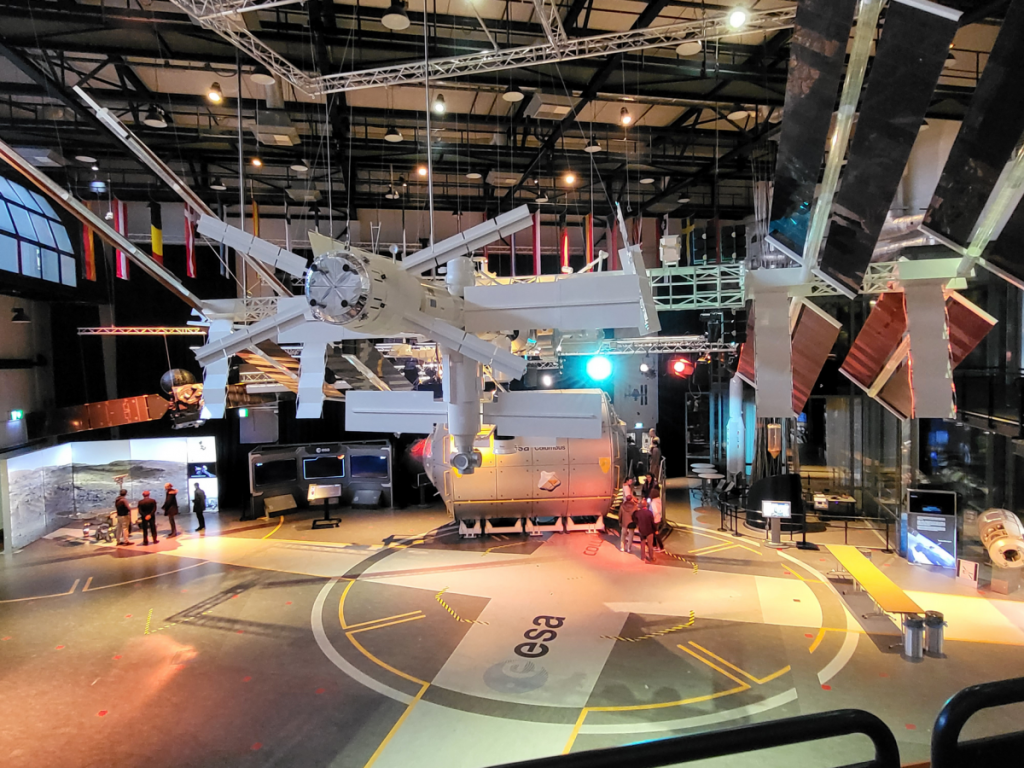
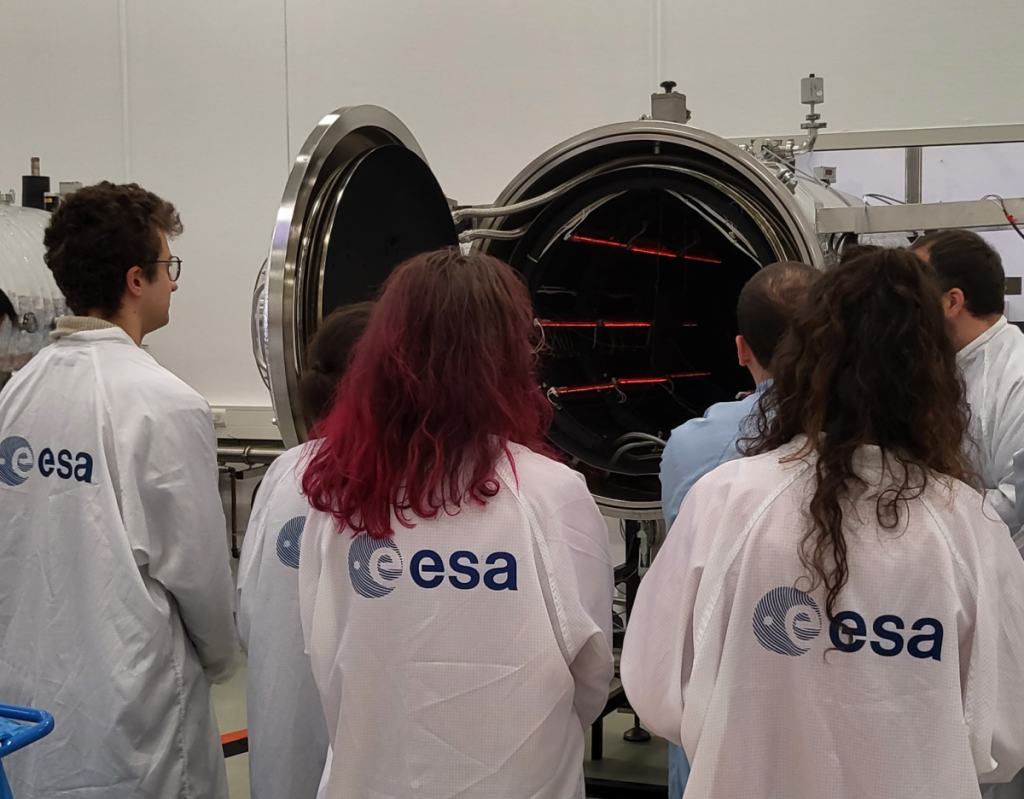
Annual visit by the M2 OSAE program to the European Space Agency’s (ESA) ESTEC Technical Center
More General Education at the University
The M2 OSAE program has been in existence for over 20 years, during which time this specialized program has gained a certain reputation in the space sector. This M2 program consists of one year of specialization in systems engineering for scientific instrumentation deployed in space or associated with major ground-based astrophysical observatories .
In collaboration with all stakeholders in space engineering and major ground-based observatories, this M2 program offers cutting-edge training in a highly technical international context. It provides a broad-based education in the fields related to astronomical observation engineering. It emphasizes a systems-based approach, which alone ensures the optimal operation of complex instrumentation by ensuring the necessary balance between its optical, electronic, mechanical, and thermal performance.
Who is the OSAE Master's program intended for?
Since its inception, the M2 OSAE program has trained several hundred engineers in the aerospace field, some of whom remain in touch through the AMOSAE association.
Career Opportunities
More than 80% of recent Master’s graduates work in engineering roles (testing, quality assurance, integration and qualification, research and development, design, etc.).
Most work in teams involved in the design, development, testing, or implementation of systems for observation, data acquisition, numerical analysis, and data processing. They apply the skills they’ve gained through their education—including a systems-oriented approach and expertise in space technology—in startups, small and medium-sized enterprises, major industrial groups, research laboratories, space agencies, and international organizations. They also have access to engineering thesis opportunities at international agencies and research laboratories.
Locations
The M2 OSAE program is supported by four institutions: the Paris Observatory – PSL, Paris-Saclay University, Sorbonne University, and Paris-Cité University. Classes are held at three locations:
Contacts
This master's program is jointly directed by Pierre Baudoz (Observatoire de Meudon – PSL),Raphaël Galicher(Université Paris-Cité),Gwenaël Boué(Sorbonne University), and Bruno Maffei (Université Paris-Saclay).
Administrative Coordinator for the OSAE Master's Program: Sonia Akrour
secretariat.masterpro@obspm.fr
Phone: 33 (0) 1 45 07 71 83