
Physics of the Solar System and Planetary Systems
Overview
The Solar System and Planetary Systems Physics team conducts research in three areas:
(1) Solid planets and moons in the solar system
(2) Asteroids and comets
(3) Exoplanets
Using instruments aboard space missions, the team works to measure the composition of planetary surfaces and atmospheres.
The goal is to characterize physicochemical and climatic processes in order to trace the history of the planets.
Water and carbon are the focus of particular attention: Where are they today in the Solar System, and in what state? What is their history, from their primordial origins to contemporary processes? What is Earth’s place among the diversity of planets and exoplanets?
The team’s recent research has focused specifically on Mars, water- and carbon-rich asteroids, Jupiter’s icy moons, Mercury, and the atmospheres of exoplanets. The composition of these objects is studied using spectrometers and visible- and infrared-light imagers.
Our approach combines observational data collection, data analysis, numerical modeling, and laboratory simulation. The team is particularly distinguished by its direct involvement in the development of numerous space instruments, with a constant focus on integrating scientific and technological challenges. The team also works on the microscopic analysis of extraterrestrial samples as part of a close collaboration with the Astrochemistry & Origins team.
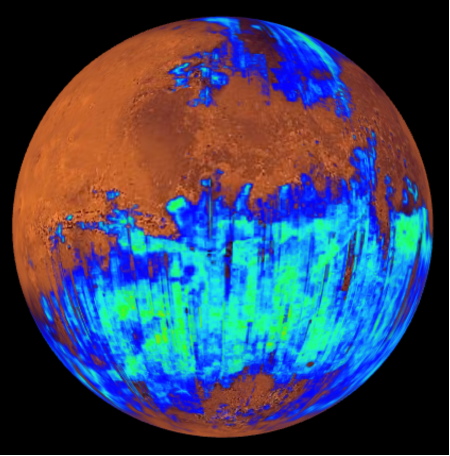
"To characterize the properties of the surfaces, atmospheres, and environments of planets and small bodies in the solar system, as well as exoplanets, in order to understand their formation, evolution, and potential to harbor life."
Mathieu Vincendon, Head of the Planetology Team
The Team
Permanent staff:
- Jean-Pierre Bibring, Professor at the University of Paris-Saclay
- John Carter, Assistant Astronomer
- Yves Langevin, Director of Research
- Cateline Lantz, Assistant Astronomer
- Marc Ollivier, Astronomer
- Cédric Pilorget, Associate Professor, University of Paris-Saclay
- François Poulet, Astronomer
- Mathieu Vincendon, Associate Professor, University of Paris-Saclay (team leader)
Thesitis:
- Kecheng Du
- Apolline Leclef
- Antoine Maillot
- Laura Nardelli
Postdoctoral Researchers:
Scientific Topics
The team has contributed to numerous leading scientific findings over the past few decades. This page highlights three seminal discoveries.
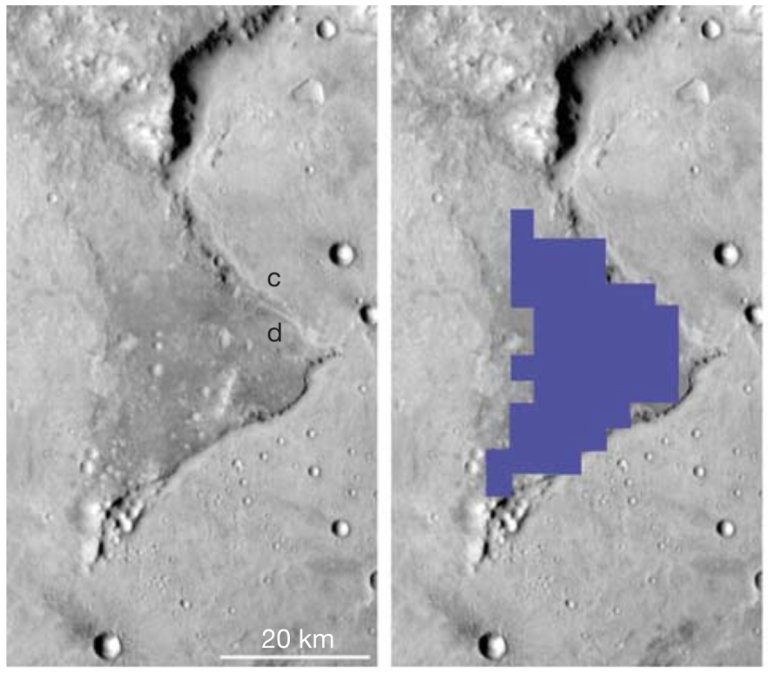
In the image above, infrared detections of clay minerals by the OMEGA instrument on the Mars Express mission are shown in blue in the image on the right. These minerals indicate the presence of liquid water, which has altered the oldest terrain on Mars—terrain that is exposed only in certain locations on the planet.
Figure taken from the 2005 article“Phyllosilicates on Mars and Implications for Early Martian Climate”
See also the popular science book *Mars: The Blue Planet* by Jean-Pierre Bibring (Odile Jacob, 2009) and the video produced to mark the 80th anniversary of the CNRS.
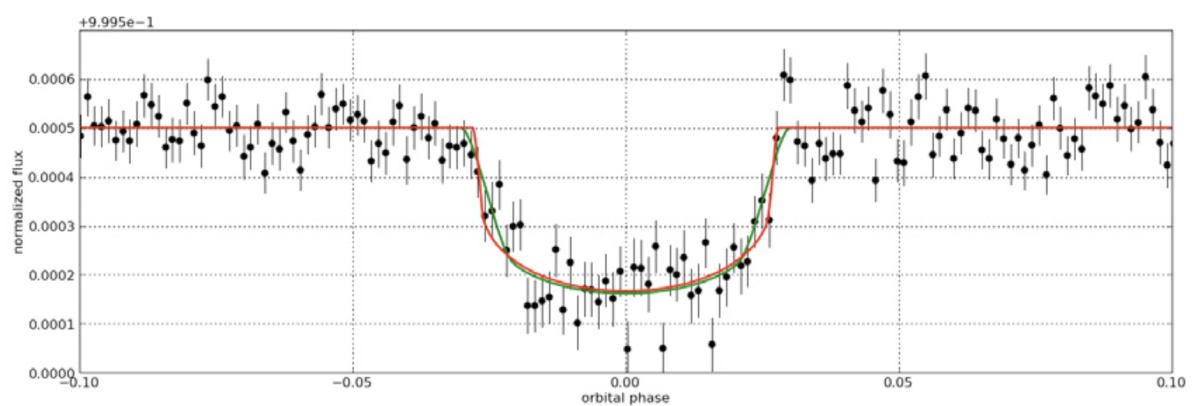
This graph shows the light curve measured by the CoRoT satellite during its observation of the exoplanet CoRoT-7 transiting in front of its star. This is the first confirmed terrestrial exoplanet with a density comparable to that of Earth.
Figure taken from the 2009 article“Transiting exoplanets from the CoRoT space mission. VIII. CoRoT-7b: the first super-Earth with a measured radius”
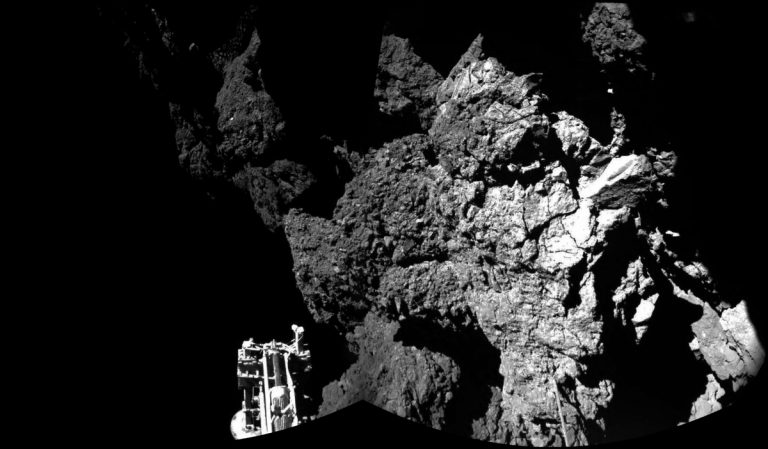
This image is the first one taken from the surface of a comet by the CIVA instrument on the Philae lander of the ROSETTA mission. It shows the exposed materials on the comet's surface, which contain organic matter.
Figure taken from the 2015 article“67P/Churyumov-Gerasimenko Surface Properties as Derived from CIVA Panoramic Images”
See also the virtual reality tool developed using data from this mission:
– Flyover mode
– Trailer V2
– Landing mode
As well as the following video, produced to mark the 80th anniversary of the CNRS.