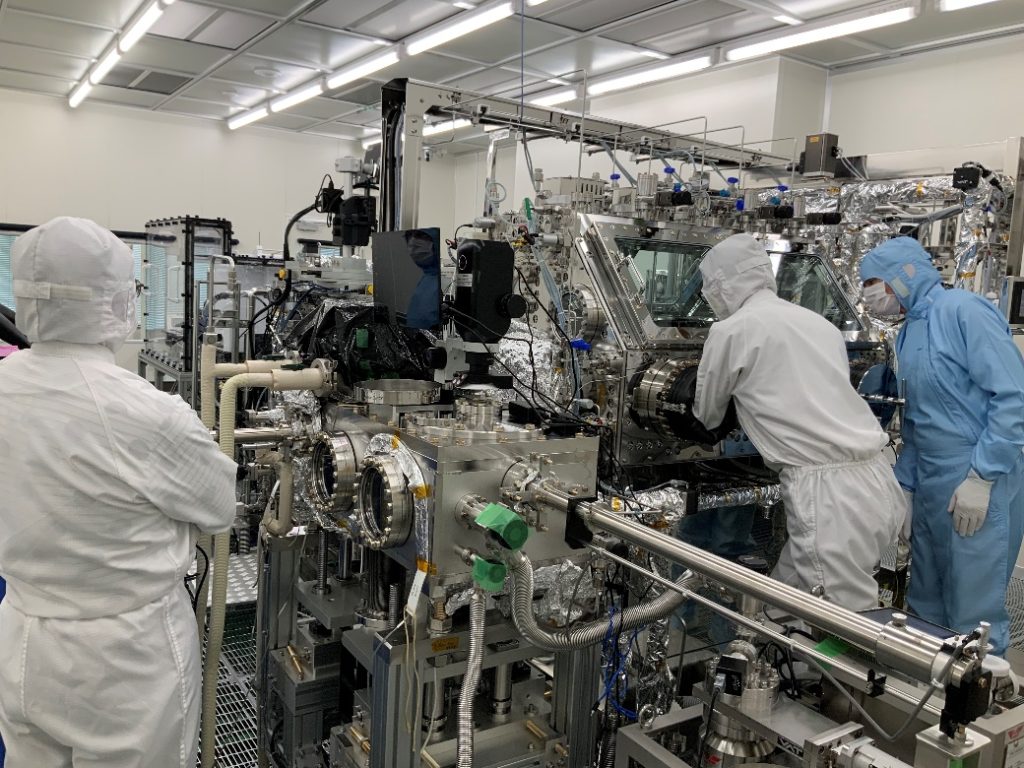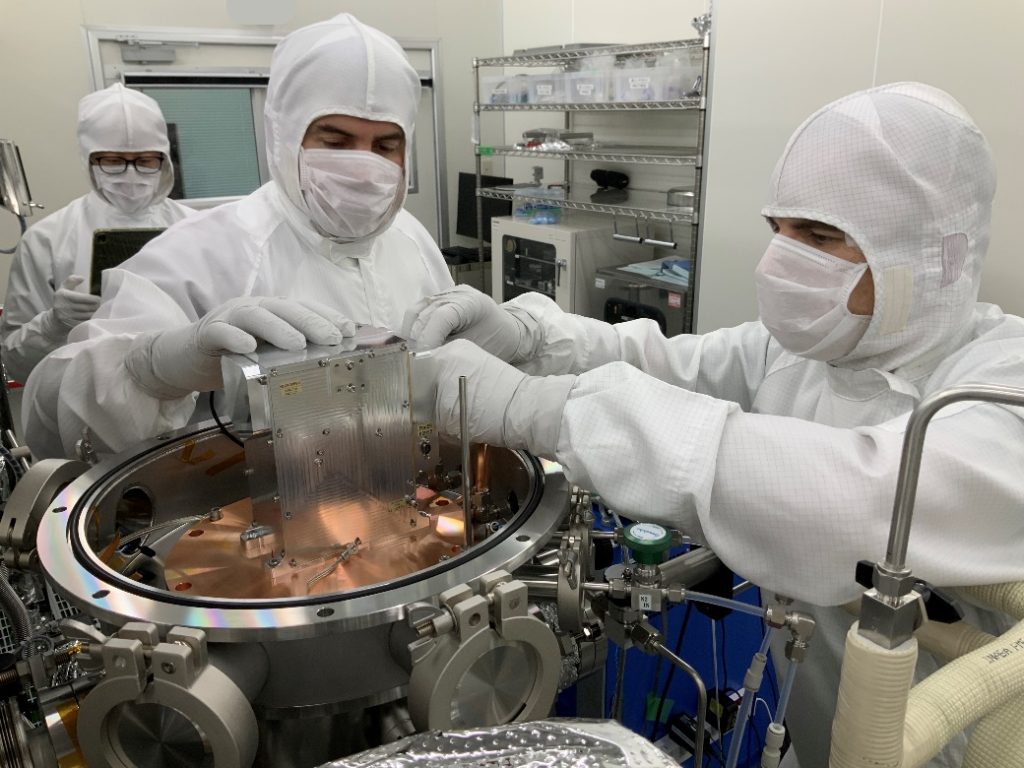
MicrOmega is installed directly inside the sample Curation Facility at ISAS (Sagamihara, Japan), where samples are stored in a controlled atmosphere. When analyzed by MicrOmega in a completely non-destructive manner, the samples have thus never been exposed to the terrestrial environment since their collection on Ryugu—a critical factor, as these samples can be altered very rapidly. The results produced by the MicrOmega instrument have already led to several publications in Nature Astronomy.
Through an agreement between JAXA and NASA, a fraction (0.5%) of the samples collected on the carbonaceous asteroid Bennu and returned to Earth by NASA's OSIRIS-REx mission in September 2023 will be transferred this summer to ISAS, where a dedicated curation facility has been developed. There, the samples will be characterized by a suite of instruments similar to the one used for the analysis of the Ryugu samples, including the MicrOmega instrument, paving the way for a comparative analysis of samples collected from Ryugu and Bennu using the same techniques under identical conditions. The results will be critical for assessing the diversity of these objects and determining the genericity or specificity of the highlighted processes.
The transfer and installation tests of MicrOmega in the new curation facility were successfully carried out during two dedicated campaigns at ISAS in the presence of members of the IAS MicrOmega team: the first in November 2023, and the second in April 2024. The installation is now fully ready for the analysis of the Bennu samples, which is scheduled to begin at the end of the summer.