
Jupiter
The SoHO (Solar and Heliospheric Observatory – ESA/NASA) mission was designed to study the Sun’s internal structure, the heating of its atmosphere, and the origins and acceleration of the solar wind.

The SoHO (Solar and Heliospheric Observatory – ESA/NASA) mission was designed to study the Sun’s internal structure, the heating of its atmosphere, and the origins and acceleration of the solar wind.
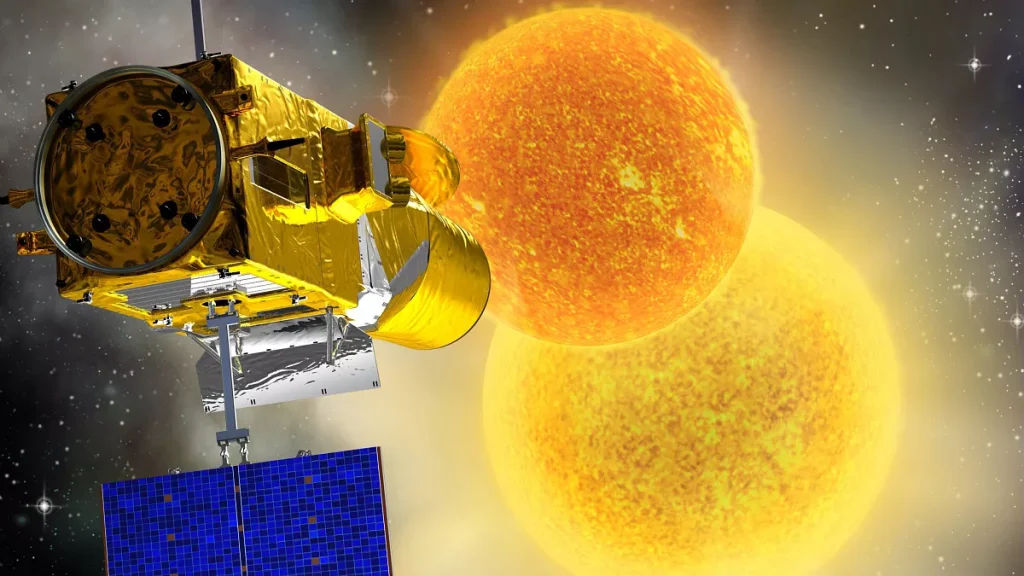
CoRoT (Convection, Rotation, Planetary Transits) is a mission led primarily by CNES for the seismic observation of stars and the search for exoplanets.
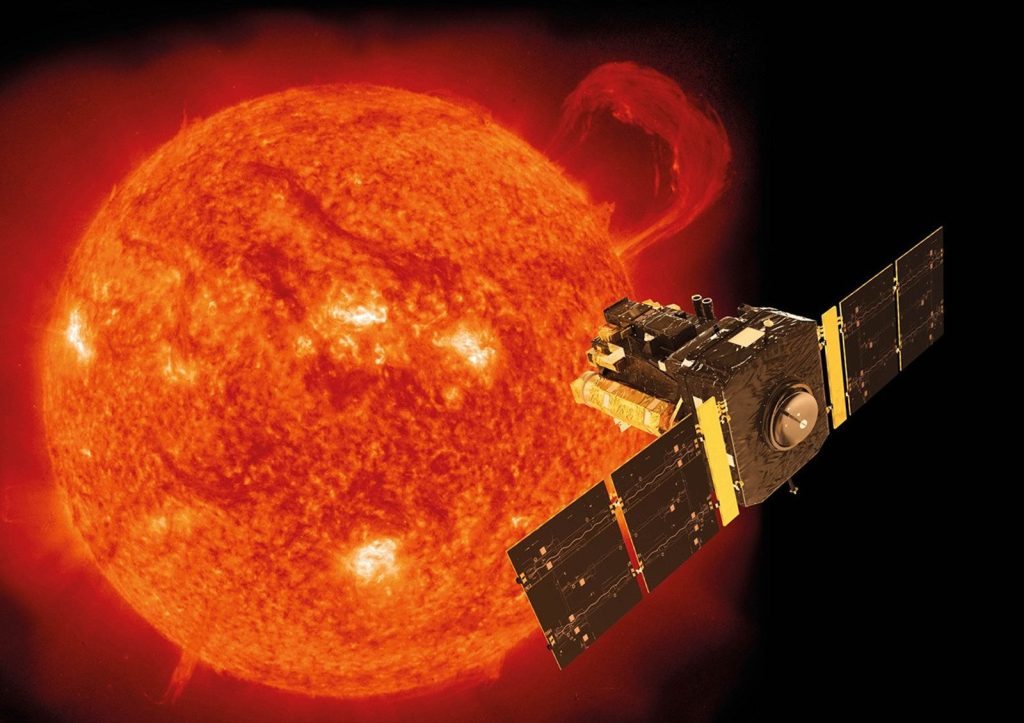
The SoHO (Solar and Heliospheric Observatory – ESA/NASA) mission was designed to study the Sun’s internal structure, the heating of its atmosphere, and the origins and acceleration of the solar wind.

PLATO (PLAnetary Transits and Oscillations of Stars) is a mission of the European Cosmic Vision 2015–2025 program.
Solar Orbiter is a mission dedicated to solar physics and the heliosphere.
Planck helps provide answers to some of the most important questions in modern science: How did the universe begin? How did it evolve into the state we observe today? And how might it continue to evolve in the future?
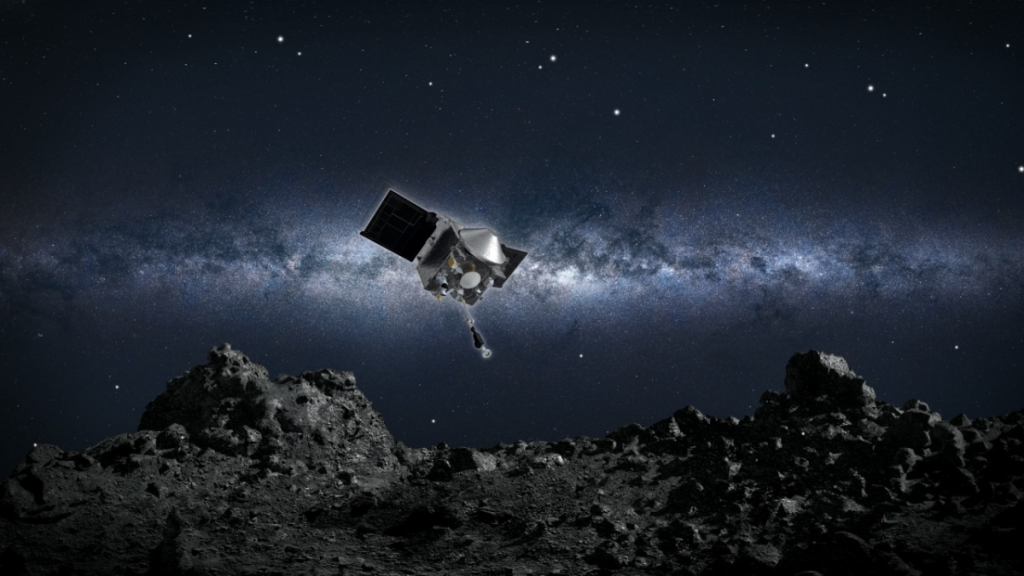
OSIRIS-REx (which stands for Origins, Spectral Interpretation, Resource Identification, Security, Regolith Explorer) is a NASA space mission whose goal is to return samples from the carbon-rich near-Earth asteroid Bennu to Earth in late 2023.
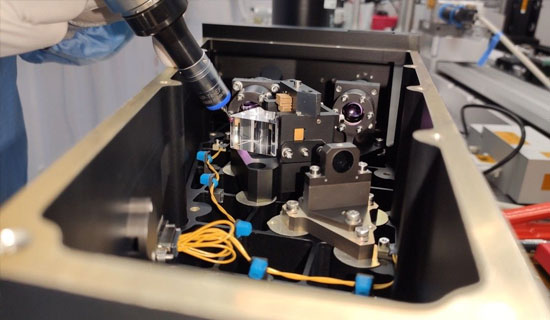
ARIEL is a space telescope that will systematically study the atmospheres of about a thousand exoplanets—ranging from gas giants to rocky planets, whether hot or temperate—orbiting stars of various types.
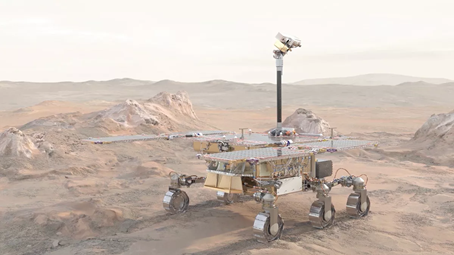
Mars is a prime target in planetary science, particularly because of the preservation of ancient terrain (4.5–3.7 billion years old) on the southern highlands, dating back to the Earth’s earliest moments.
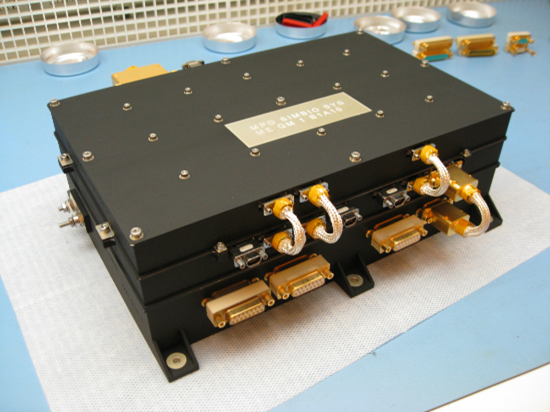
The BepiColombo mission was launched on October 19, 2018, to study the planet Mercury starting in 2026.