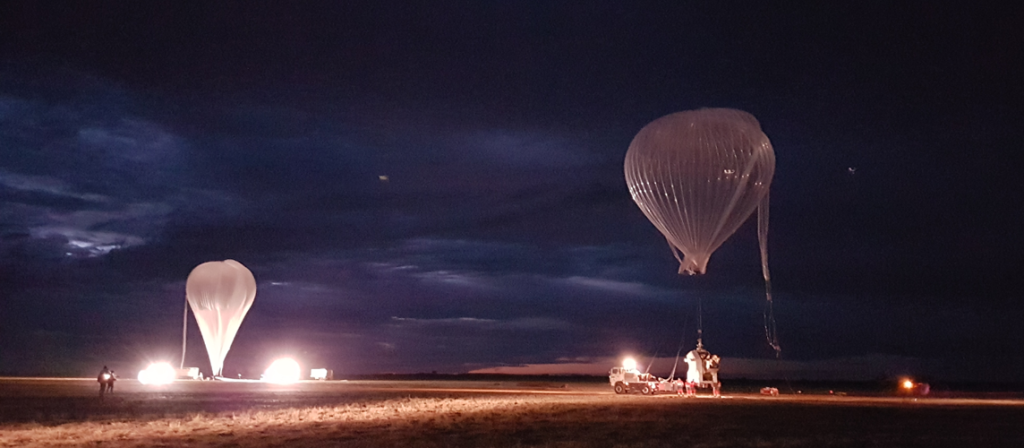
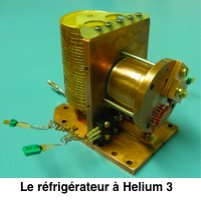
Photo © IRAP/C. Marty, 2017
PILOT
PILOT (Polarized Instrument for Long-wavelength Observation of the Tenuous Interstellar Medium) is an astrophysics experiment carried aboard a balloon (CNES) to measure the polarized emission from dust grains in the interstellar medium.
PILOT instrument carried aboard a stratospheric balloon
Scientific Objectives:
PILOT aims to measure polarized radiation in the submillimeter wavelength range caused by dust grains in the interstellar medium of our Galaxy.
Instrumental concept:
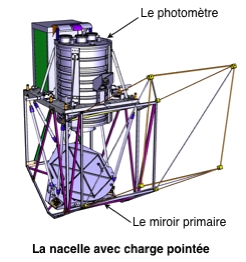
The instrument, carried aboard a stratospheric balloon, consists of a gondola and a pointed payload. The pointed payload consists of a telescope and a photometer.
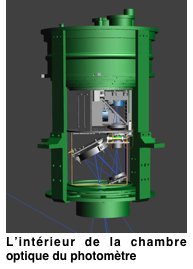
The photometer will enable observations in two spectral bands at 240 μm and 550 μm. It consists of a cryostat housing the various optical components for collecting, analyzing, and filtering light. All of these components are cooled to below 3 degrees Kelvin.
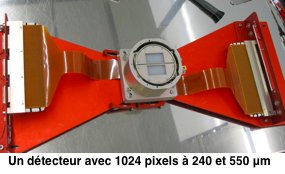
The heart of the photometer is an array of bolometric detectors comprising 1,024 pixels per band and cooled to 300 mK using a helium-3 refrigerator.
Thephotometer isunder the responsibility of the IAS.
The first flight took place on September 20, 2015.
Status
In operation
Key Dates (tentative)
September 20, 2015: First flight in a stratospheric balloon.
Key Steps
- Instrumental Concept :
- Payload and pointed load: Consisting of a telescope and a photometer.
- Photometer : Observations in two spectral bands (240 µm and 550 µm).
- Cryostat: Contains the optical, collection, analysis, and light-filtering components, which are cooled to below 3 K.
- Bolometric detectors: 1,024 pixels per band, cooled to 300 mK using a helium-3 refrigerator.
- Responsibility: TheIAS is responsible for the photometer.
For more information: