
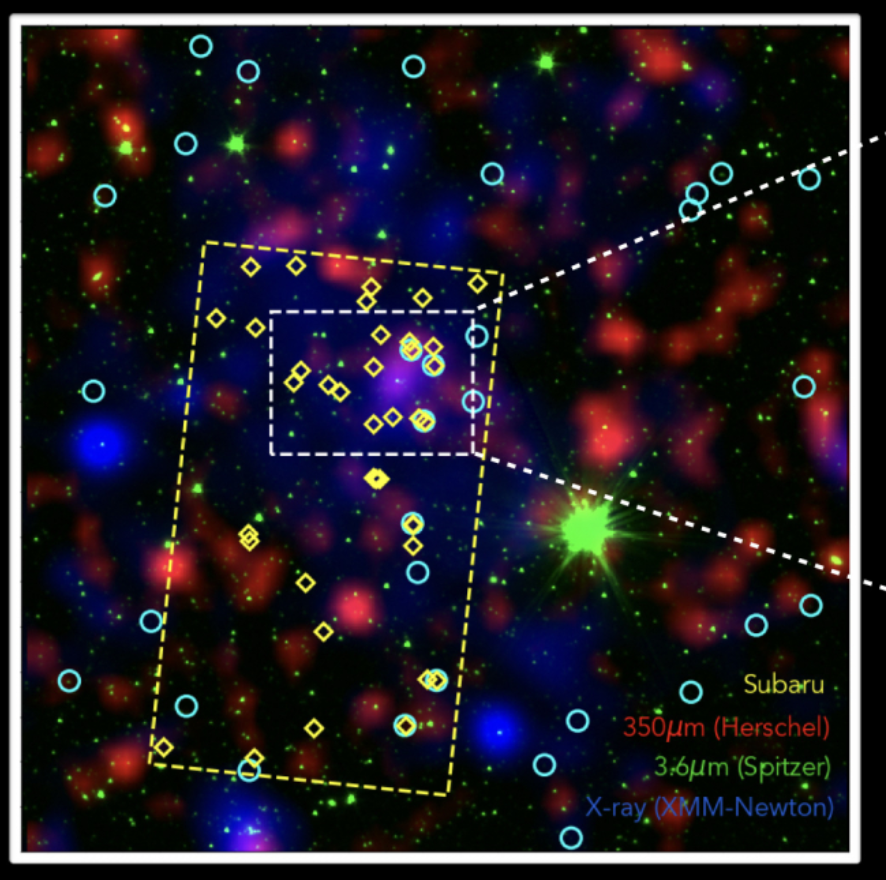
New discovery of a highly active galaxy protocluster dating back to when the Universe was 3 billion years old
A galaxy protocluster dating from the most active epoch of the Universe has been discovered.

A galaxy protocluster dating from the most active epoch of the Universe has been discovered.
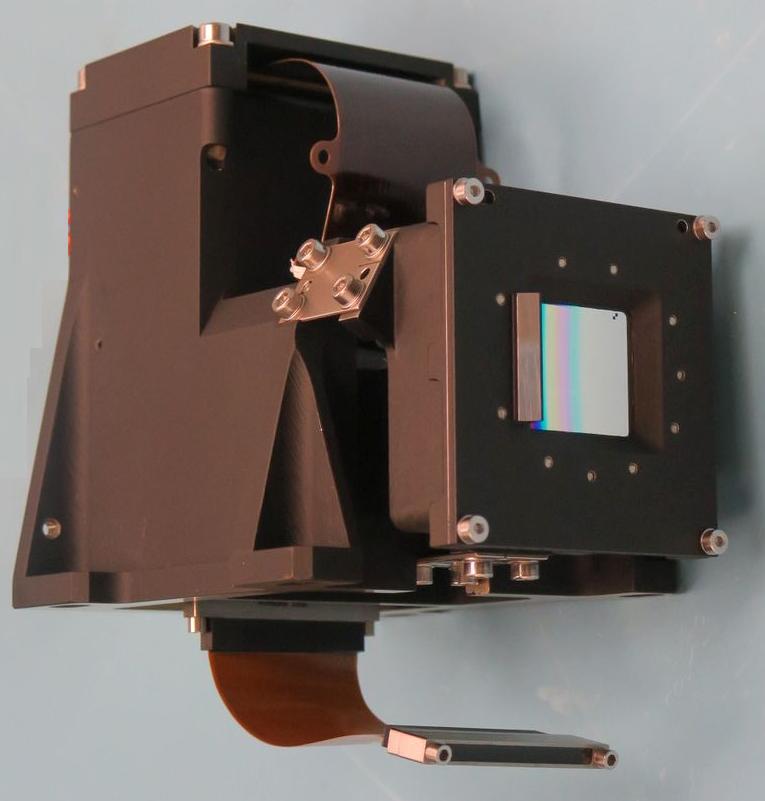
The optical head of the MAJIS (Moons And Jupiter Imaging Spectrometer) visible and infrared imaging spectrometer has been delivered to ESA and Airbus for mechanical and electrical integration aboard ESA's JUICE (JUpiter ICy moons Explorer) spacecraft.
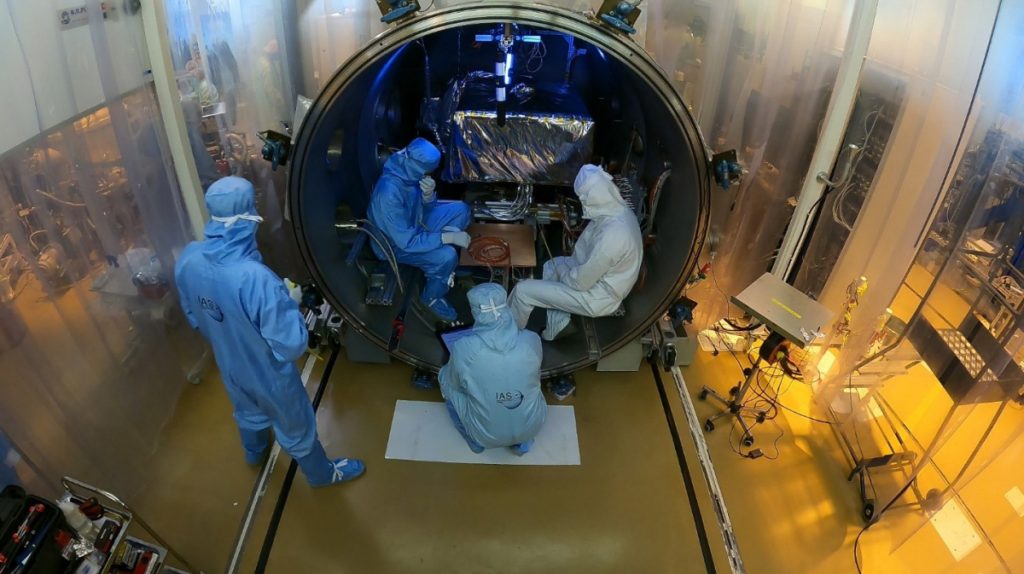
The optical head (OH) of the MAJIS (Moons and Jupiter Imaging Spectrometer) instrument, delivered in mid-August to IAS, has been calibrated at the IAS calibration facility.
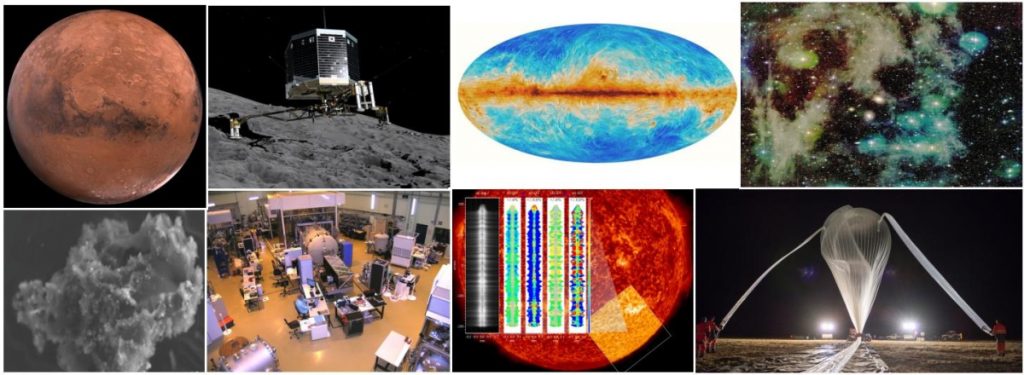
As part of the Fête de la Science, IAS will open its doors to the public on Sunday, October 14, 2018, from 2:00 PM to 6:00 PM.
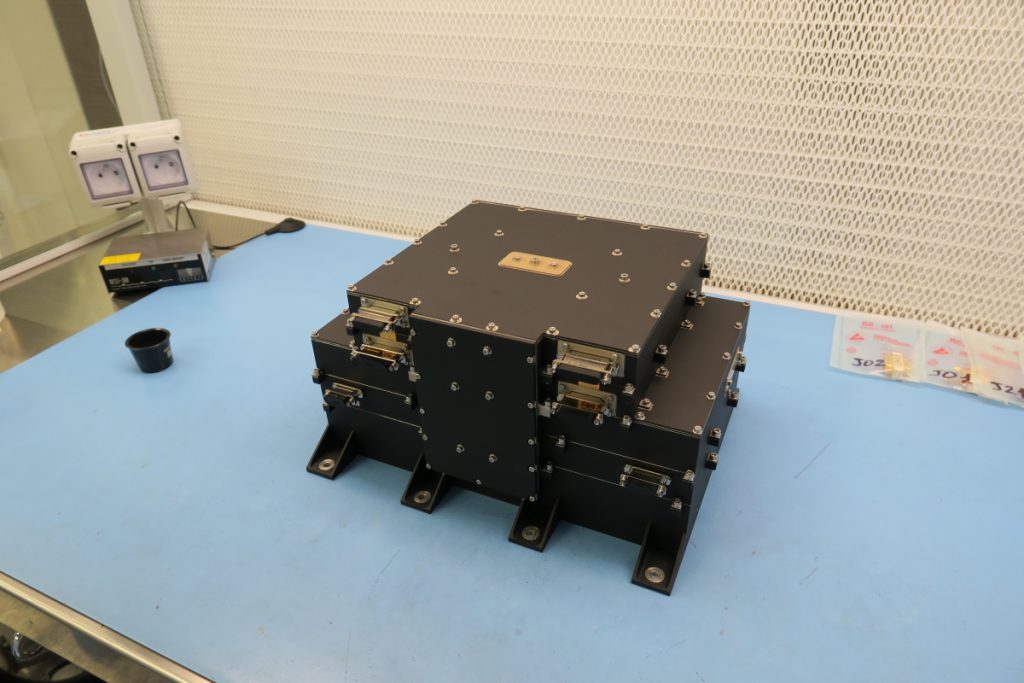
The MAJIS project has reached a major milestone by delivering the Main Electronics (ME) to Airbus for integration into the core of the satellite, ensuring optimal protection against Jupiter's radiation.
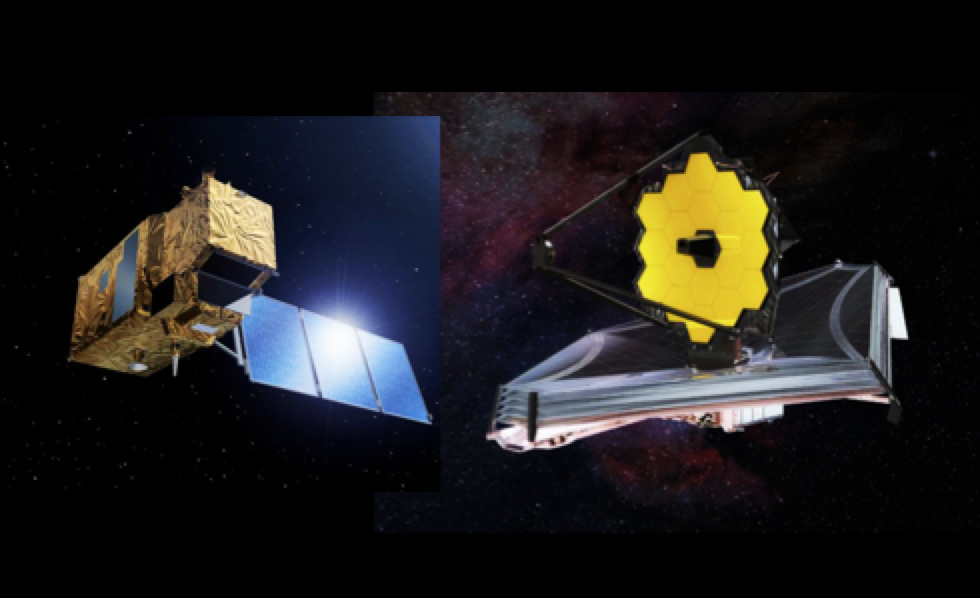
The INCLASS LabCom (Innovative Common Laboratory For Space Spectroscopy) was established between IAS and ACRI-ST for an initial duration of four years.
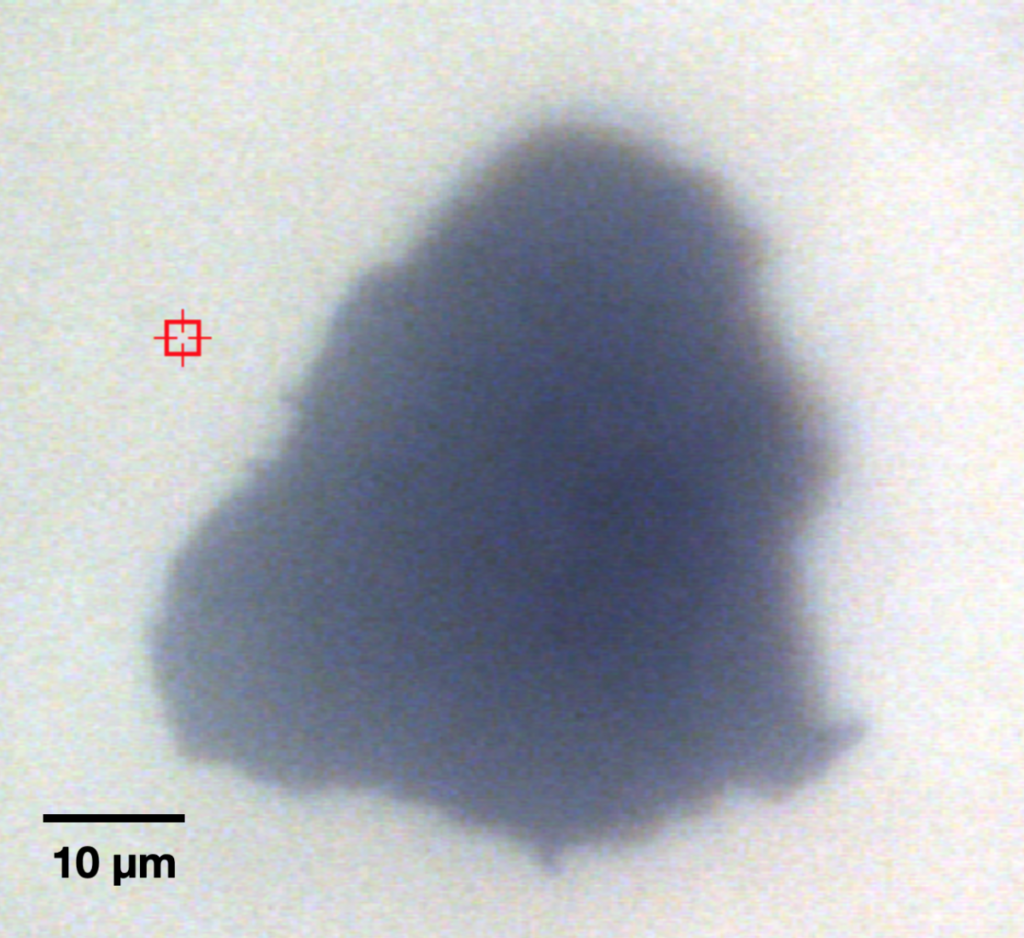
The Astrochemistry and Origins team at IAS, in collaboration with the SMIS beamline at the SOLEIL synchrotron, has initiated the analysis of several micrometric grains from the asteroid Ryugu, notably using Fourier-transform infrared micro-tomography.
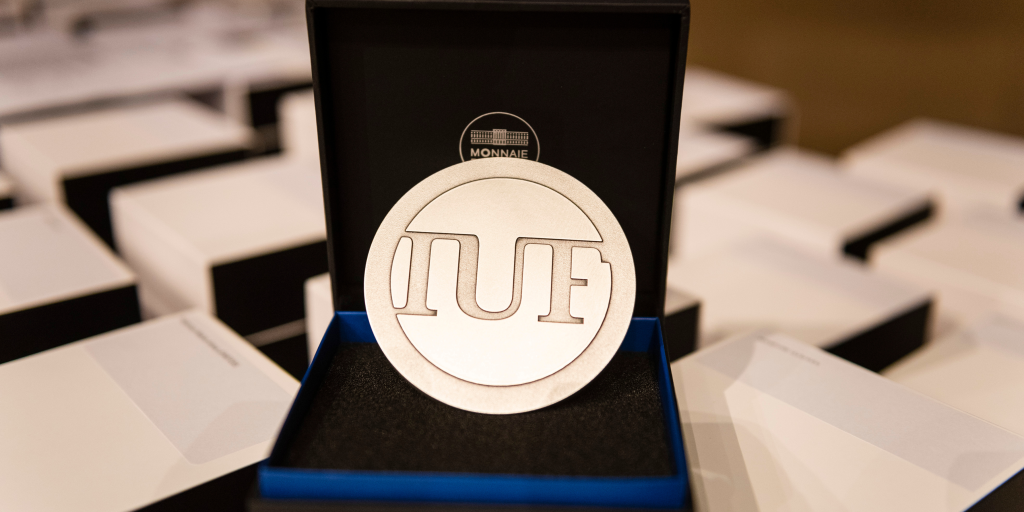
By decree of the Minister of Higher Education, Research and Innovation dated May 12, 2021, Cédric Pilorget, senior lecturer at Paris-Saclay University and based at the IAS, has been appointed as a Junior Member of the Institut Universitaire de France for a 5-year term starting October 1, 2021, in recognition of his outstanding scientific achievements.

On Thursday, June 17, 2021, to coincide with the passage of the International Space Station (ISS) over the Orsay campus of Université Paris-Saclay, a roughly ten-minute radio contact will be established with Thomas Pesquet, live from space.
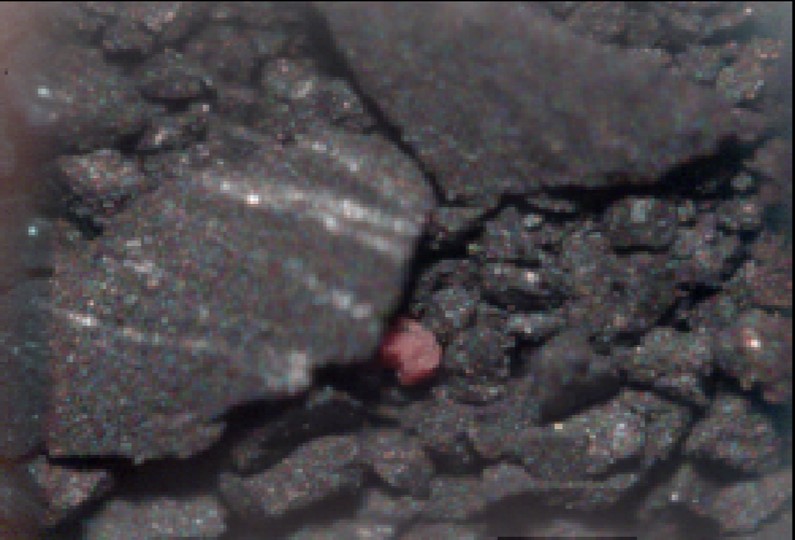
JAXA’s Hayabusa2 mission successfully performed an unprecedented collection of samples from a very primitive carbonaceous asteroid, which were successfully returned to Earth in early December 2020.