
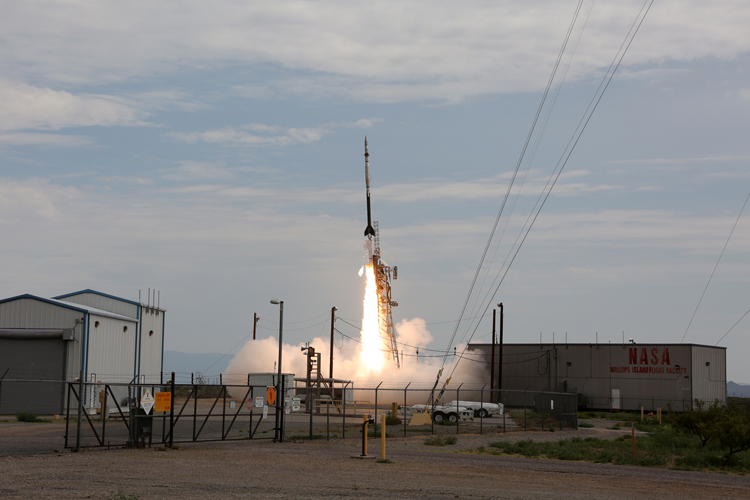
The objective of CLASP is to derive the magnetic field in the solar chromosphere from spectropolarimetric measurements of the neutral hydrogen Lyman-alpha line (121.6 nm). Although the magnetic field in the solar atmosphere (chromosphere and corona) dominates the physical processes occurring within it, to date it has only been known through extrapolations of the magnetic field measured in the photosphere. CLASP observations represent the first direct measurements of the magnetic field in the upper layers of the solar atmosphere, thus paving the way for a new field of study.
CLASP consists of a 28 cm diameter telescope feeding a spectropolarimeter operating at 121.6 nm. IAS, a co-PI of the instrument, provided several major contributions: the optical concept of the spectropolarimeter was initially developed at IAS; the high-reflectivity polarizer technology was developed at the Institut d'Optique as part of the LYOT/SMESE project; and finally, the laboratory provided the diffraction grating.