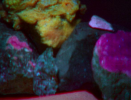
As a space laboratory, the IAS develops new instrument concepts designed to meet the needs of future space missions. As part of the multiscale characterization of objects in the Solar System, hyperspectral imaging in the visible and near-infrared spectrum makes it possible to characterize surface composition and, thereby, trace the various processes that have taken place. One of the major challenges associated with this technique is miniaturizing the instruments, particularly to make them suitable for in situ missions. The ExoCam R&T project aims to develop a new instrument concept that meets this need by utilizing acousto-optic filtering technology.
Acousto-optic filters (AOTF, Acousto-Optic Tunable Filter) are compact, electrically controlled light-dispersion systems operating in the visible/near-IR range, with very high efficiency. The filtering performed by the acousto-optic filter also preserves spatial information. The addition of an AOTF thus makes it possible to transform an imaging system into a hyperspectral imaging system with only a moderate increase in volume and mass. R&D activities conducted at the IAS have notably demonstrated the validity of this concept through the development of an instrument bench covering the 1.0–1.7 μm range. The ExoCam project aimed to continue this work by extending the spectral range of study to 0.9–3.6 μm—representative of the range desired for an in-flight instrument (enabling the characterization of most minerals, ices, and organic compounds), and to demonstrate the feasibility of such an instrument within a mass/volume/power budget compatible with the constraints of a rover or lander.
This concept can also be used for instruments aboard space probes that take measurements from orbit. This technique is particularly effective for dark objects due to its high filtering efficiency.