
RESEARCH QUESTIONS
What is cosmology?
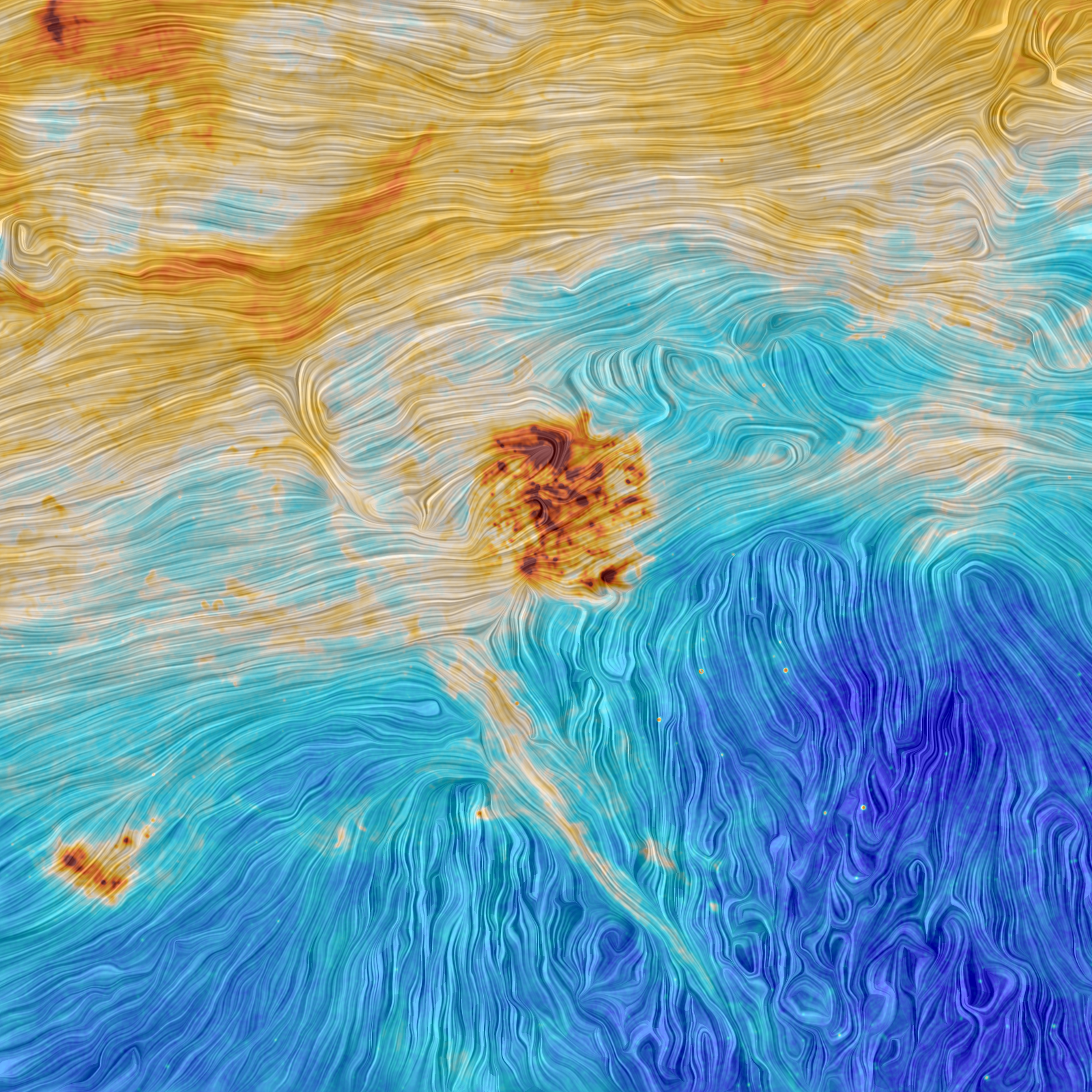
Laura Salvati, head of the Cosmology team at IAS, defines cosmology as the study of the temporal evolution of the Universe, from the Big Bang to the present day:
“Understanding the evolution of the Universe, from the Big Bang to the present day, by analyzing current observations (satellites, telescopes) and modeling the physical processes that shaped its structure.”
Methodology
This relies on the following methodology:
- Observation: Data collected by satellites and telescopes.
- Analysis: Study of signals (e.g., photons from the CMB – Cosmic Microwave Background, a “very early photograph of the Universe”).
- Modeling: Use of theoretical models to interpret the data.
- Instrumentation: Cryogenic cooling chain to preserve cosmological signals.
Furthermore, the complete research process in cosmology spans a significant duration:
Theory → Simulations → Mission Design → Predictions → Observations → Analyses → Interpretation and scientific return (~10-year cycle).
Instruments
Satellites:
- Planck: Full-sky map of the CMB (the oldest observation of the Universe, though not the initial apparatus).
- Euclid (ESA): Study of the galaxy distribution.
- Fossil (ESA): Mission dedicated to the study of cosmic structures.
Ground-based telescopes:
- SKA (Square Kilometre Array, Australia/South Africa): Observation of the 21-cm line (neutral hydrogen) to map the early Universe.
- Simons Observatory and LiteBIRD: Observation of the same map as Planck (data cross-correlation).
Laura S explains that “each project is a piece of the puzzle: together, they allow us to construct a coherent history of the Universe, from the CMB to the cosmic web.”