
RESEARCH QUESTIONS
What is cosmology?
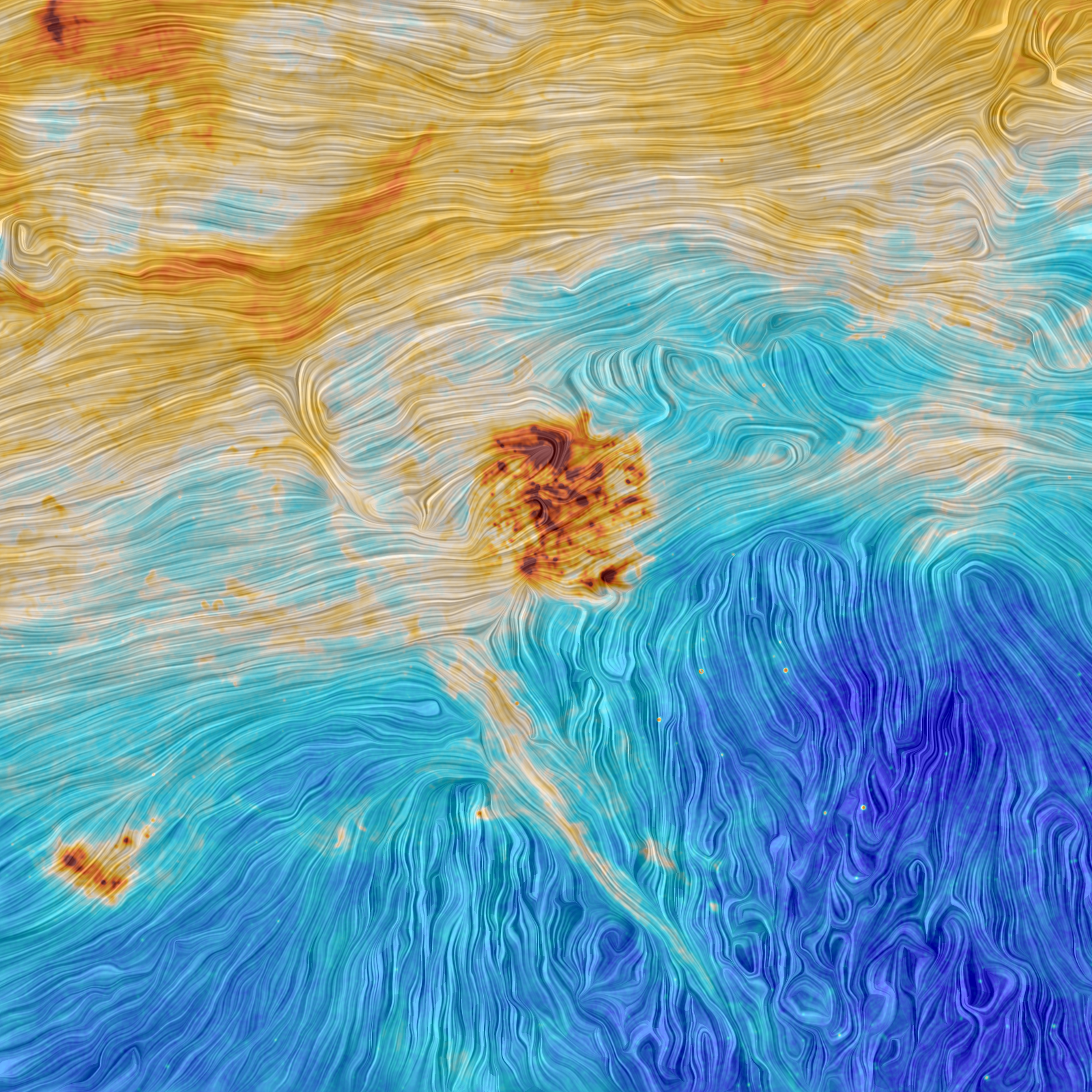
Laura Salvati, head of the Cosmology team at the IAS, defines cosmology as the study of the temporal evolution of the universe, from the Big Bang to the present day:
“ Understanding the evolution of the Universe, from the Big Bang to the present day, by analyzing current observations (satellites, telescopes) and modeling the physical processes that have shaped its structure.”
Methodology
This requires a specific methodology:
- Note: Data collected by satellites and telescopes.
- Analysis: Study of signals (e.g., photons from the CMB—Cosmic Microwave Background, “a very early snapshot of the Universe”).
- Modeling: Using theoretical models to interpret data.
- Instrumentation: Cryogenic cold chain for preserving cosmological signals.
Furthermore, the entire process of cosmological research is a long-term endeavor:
Theory → Simulations → Mission Design → Predictions → Observations → Analyses → Interpretation and Scientific Feedback (approximately 10-year cycle).
Instruments
Satellites:
- Planck : Complete map of the sky in CMB (the earliest observation of the universe, but not the original instrument).
- Euclid (ESA): Study of the distribution of galaxies.
- Fossil (ESA): A mission dedicated to the study of cosmic structures.
Ground-based telescopes:
- SKA (Square Kilometre Array, Australia/South Africa): Observation of the 21-cm line (neutral hydrogen) to map the early Universe.
- Simons Observatory and LifeBird: Observation of the same map as Planck (data integration).
Laura S explains that “each project is a piece of the puzzle: together, they help build a coherent story of the Universe, from the CMB to the cosmic web.”