Telescopes Closer to the Sun Than Ever Before
The Sun has never been photographed from this close. During its first perihelion—the point closest to the Sun on the probe's elliptical orbit—Solar Orbiter approached within 77 million kilometers of the Sun's surface, roughly half the distance between the Sun and the Earth. The probe will eventually get much closer to the Sun; it is currently in its cruise phase and is gradually adjusting its orbit around the Sun. When it enters its scientific phase in late 2021, the probe will approach as close as 42 million kilometers from the Sun's surface, well inside Mercury's orbit. Mission operators will progressively incline Solar Orbiter's orbit to allow the spacecraft to properly observe the Sun's poles for the first time.
"Campfires" in the Solar Atmosphere
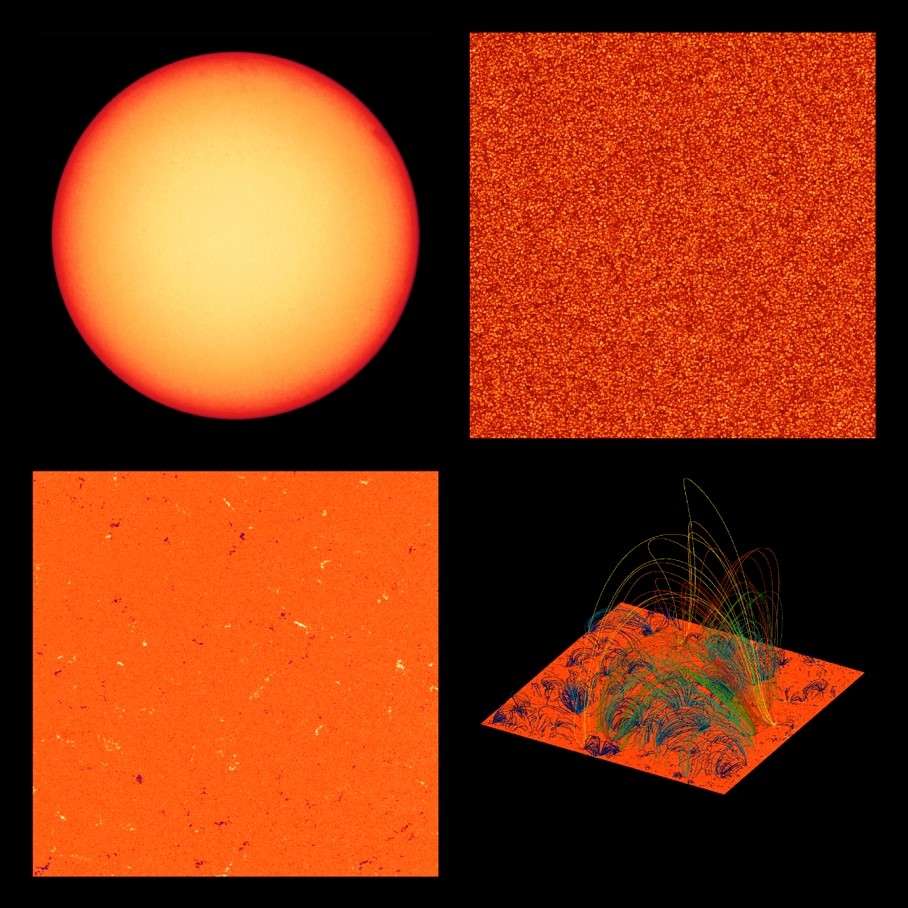
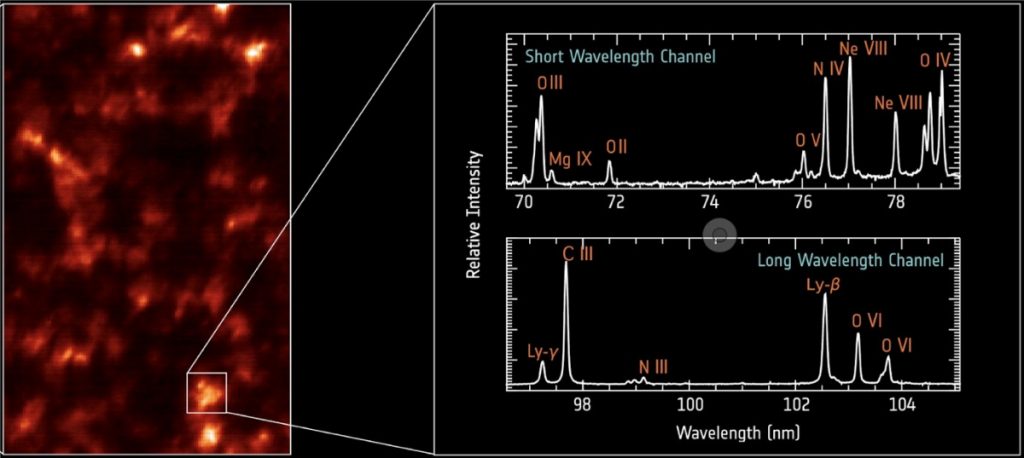
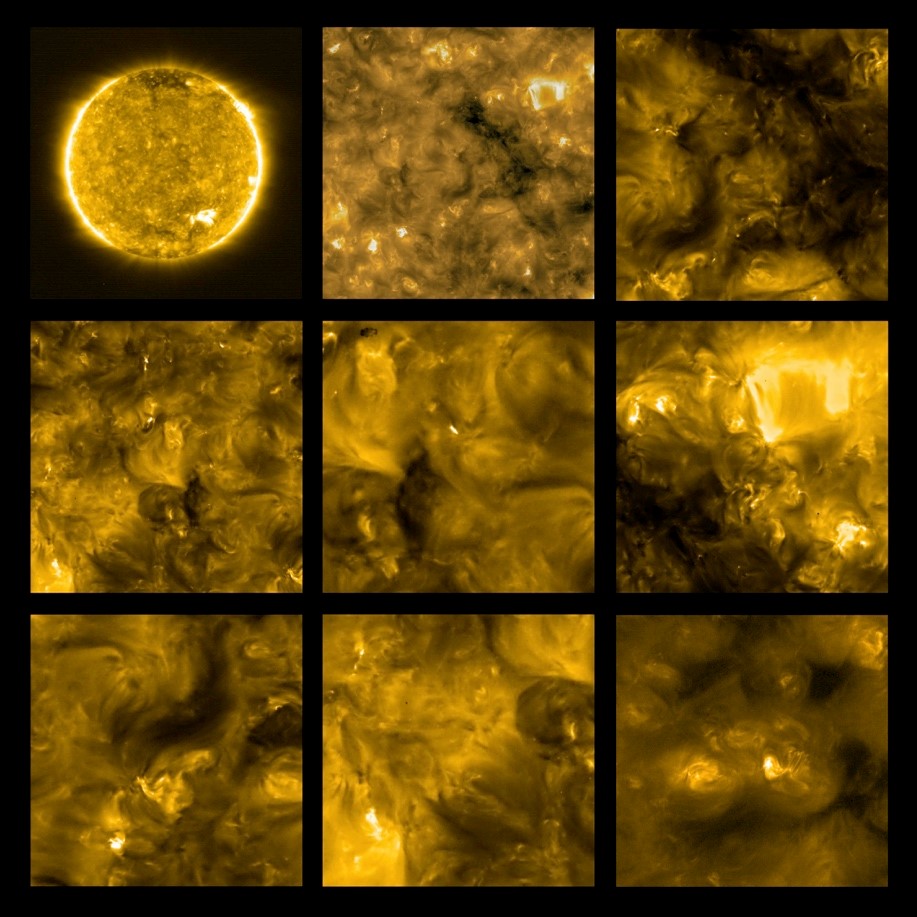
Solar Orbiter carries six cameras, each studying a different aspect of the Sun. While the first images from a space mission typically serve to confirm proper instrument functionality without necessarily yielding new discoveries, the Extreme Ultraviolet Imager (EUI) returned data hinting at solar features never observed in such detail: "campfires." These phenomena are thought to be scaled-down versions of the solar flares observed to date by solar satellites. They may be ubiquitous, theorized mini-explosions known as nanoflares that could contribute to heating the solar atmosphere. To be certain, scientists require more precise temperature measurements of these campfires. Fortunately, the SPICE (SPectral Imaging of the Coronal Environment) spectral imaging instrument, also onboard Solar Orbiter, does precisely that. "We are therefore eagerly awaiting our next dataset," said Frédéric Auchère, Principal Investigator for SPICE operations at the Institut d'Astrophysique Spatiale in Orsay, France. "The hope is to definitively detect nanoflares and quantify their role in coronal heating." An International Mission with Strong French ContributionSolar Orbiter is an international space mission in collaboration between ESA and NASA. France participated in six of the ten instruments onboard Solar Orbiter. The Institut d'Astrophysique Spatiale (IAS, CNRS/Université Paris-Saclay) plays a significant role in three remote-sensing instruments: SPectral Imaging of the Coronal Environment (SPICE), the Extreme Ultraviolet Imager (EUI), and the Polarimetric and Helioseismic Imager (PHI).