
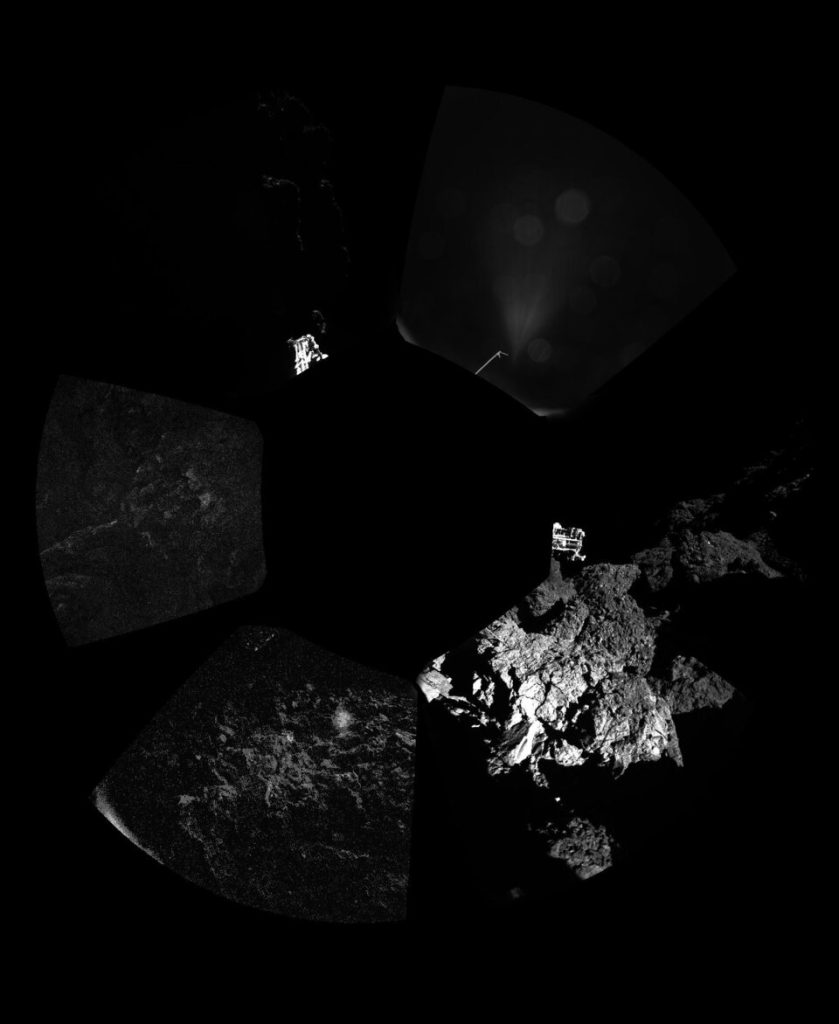
Following a fascinating sequence marked by a flawless descent—impacting just a few dozen meters from the targeted location before taking two bounces—Philae came to rest in a cliff-bordered depression in an acrobatic position. This was first revealed in a panorama captured by the CIVA cameras developed under the responsibility of the IAS, thereby confirming the mission's first major success: Philae has landed on the nucleus of comet 67P/Churyumov–Gerasimenko!
An initial sequence of measurements and observations was executed using all onboard instruments, followed by a rotation to optimize the illumination of the solar panels and thermal sensors. This ensured Philae's survival through an upcoming hibernation phase, after which scientific operations are expected to resume. The IAS contributed significantly to this spectacular success through its overarching scientific responsibility for Philae and the CIVA imaging system, alongside its participation in two major orbiter instruments: COSIMA and VIRTIS.