
The Planck satellite has completed its mission
After 1,554 days in space, the Planck satellite completed its observations on August 14, 2013. While the high-frequency instrument (HFI) stopped taking measurements on January 14, 2012, the low-frequency instrument was able to operate for nearly 600 additional days because its operating temperature is much higher. All that remains is to “park” the satellite in the solar system before saying goodbye to it.
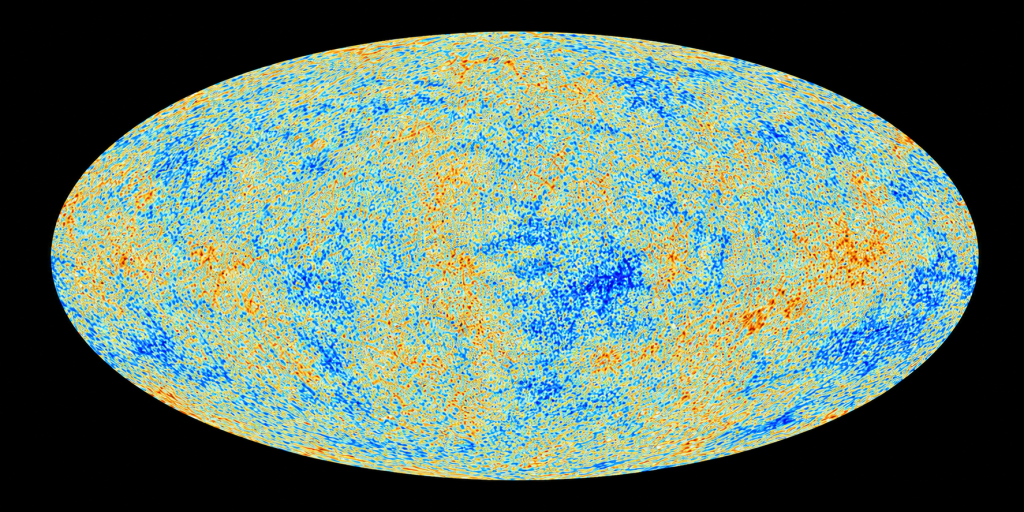
The Planck satellite carried two instruments, LFI and HFI, the former observing the sky in the radio wavelength range and the latter in the submillimeter and far-infrared wavelength ranges. HFI was built under the leadership of the IAS in Orsay, with Jean-Loup Puget serving as project manager. Planck released its first cosmological results in April 2013, including the sharpest image ever obtained of the cosmic microwave background.
The HFI instrument’s detectors can only operate at the extreme temperature of -273.05°C, or 0.1 K—that is, just 0.1 degree above absolute zero. The cooling system required to reach this extreme temperature uses very specific gases, whose onboard reserves were depleted in early 2012; consequently, the HFI instrument was shut down after a successful mission and a duration of operation far exceeding the requirements. Shut down, but not completely, since the second cryogenic stage (at 4 K) continued to provide the reference temperature for the LFI instrument, as did the 20 K stage, which allowed the radiometers to operate under optimal conditions. The low-frequency LFI instrument was thus able to continue its observations.
Eight Skies for LFI
The best balance between scientific objectives and operating costs at that time was to extend the mission until August 14, 2013, to allow LFI to complete eight full sky surveys (instead of nearly five for HFI).
These eight independent maps allow for multiple combinations: researchers can thus reduce measurement noise on the one hand, and fine-tune the instrumental response on the other. As a result, the quality of the 30, 50, and 70 GHz maps from the extended mission will be far superior to that of the nominal mission, which included only two complete sky surveys.
The end of LFI marks the end of Planck
Astrophysicists now have all the data at their disposal; the observational phase of the mission is complete. ESA engineers still have a few months of work ahead of them. The satellite is in a pseudo-stable orbit around an unstable equilibrium point—the L2 Lagrange point of the Sun-Earth system. It cannot be left in this location without performing regular maneuvers. It is also more prudent to make room for future satellites. It must therefore be directed toward its “retired satellite” orbit.
Many months of scientific analysis
The end of the satellite’s observations does not mean the end of scientific analysis. After publishing some 30 scientific articles in April 2013 based on the first 15 months of data, the Planck consortium is working on the next set of cosmological results, due in mid-2014, covering the 29 months of joint HFI and LFI operations.
A consortium of laboratories
French laboratories played a crucial role in the design, development, and project management of the HFI (High Frequency Instrument), with support from CNES, CNRS, and universities. In particular:
• The Institute of Space Astrophysics (IAS: CNRS/INSU, University of Paris-Sud) played the leading role by overseeing the initial design and providing scientific and technical leadership for the instrument. It also carried out the integration and testing of the finished instrument and is responsible for HFI’s in-flight operations. The principal investigator is Jean-Loup Puget;
• The Paris Institute of Astrophysics (IAP: CNRS/INSU, Pierre and Marie Curie University) hosts the data processing center and is responsible for this activity;
• The Center for Research on Very Low Temperatures, now the Néel Institute (CNRS), and the Laboratory of Subatomic Physics and Cosmology (LPSC: CNRS, Joseph Fourier University, Grenoble Institute of Technology) played a major role in the development of cryogenics at 0.1 K and 20 K, respectively;
• the Center for Space Radiation Studies (CESR: CNRS/INSU, Paul Sabatier University) in the development of detector readout electronics;
• the Linear Accelerator Laboratory (LAL: CNRS/IN2P3, Paris-Sud University) in the development of the instrument’s onboard computer;
• the AstroParticle and Cosmology Laboratory (APC: CNRS, Paris-Diderot University, CEA, Paris Observatory) in the development of testing facilities;
• the Grenoble Astrophysics Laboratory (LAOG: CNRS/INSU, Joseph Fourier University) and the Laboratory for the Study of Radiation and Matter in Astrophysics (LERMA: CNRS, Paris Observatory, University of Cergy-Pontoise, Pierre and Marie Curie University, École Normale Supérieure) contributed their expertise in instrument modeling.