
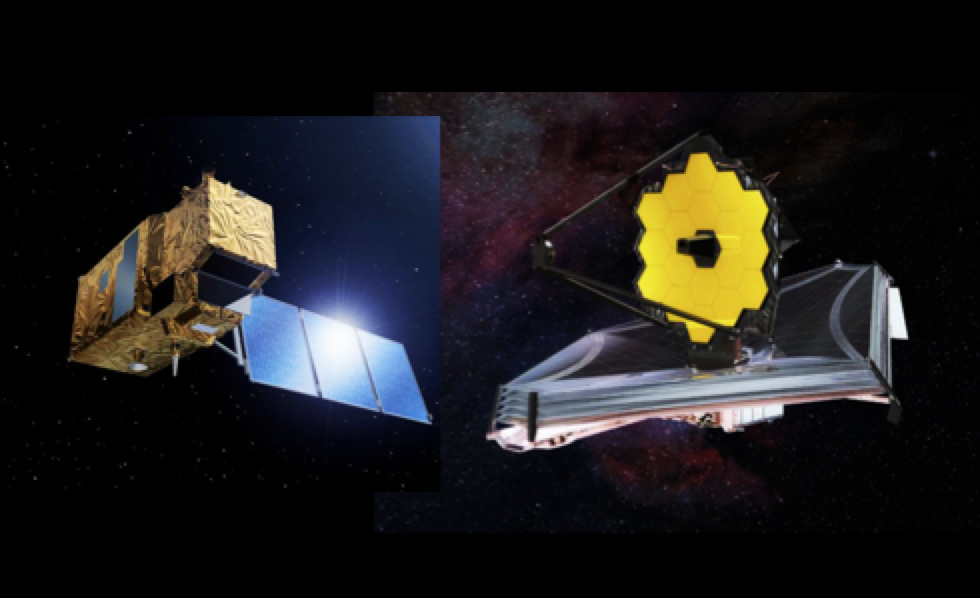
One of the main challenges in exploiting data from the JWST and the Sentinel-2 and -3 missions of the European Copernicus program is combining datasets from different instruments to produce the highest quality observational data (images and spectra). The objective of INCLASS is to develop the necessary tools and make them accessible to the community.
INCLASS combines the expertise of IAS and ACRI-ST to develop novel methodologies for fusing imaging and spectroscopic data. These methodologies will be applied to data from the JWST and the Sentinel-2 and -3 missions of the European Copernicus program. ANR funding will enable the recruitment of a PhD student and two engineers, in addition to the resources provided by IAS and ACRI-ST.
ACRI-ST is an independent SME in the space sector specializing in scientific research, engineering, and operations. It covers the entire value chain, from supporting onboard instrument specifications and ground segment data development to operational user services. Building on its long-standing history and expertise in Earth observation, ACRI-ST is currently expanding its involvement in space sciences.
The JWST is the result of a collaboration between NASA, ESA, and the CSA (Canadian Space Agency). Scheduled for launch in autumn 2021, it will be the largest and most complex space telescope ever deployed, with an operational lifespan projected between 5 and 10 years.
Copernicus is the most ambitious Earth observation program ever conceived. Within this framework, ESA currently develops and operates the Sentinel missions, which carry various spectro-imagers featuring either high spatial resolution or high spectral resolution, but never both simultaneously.