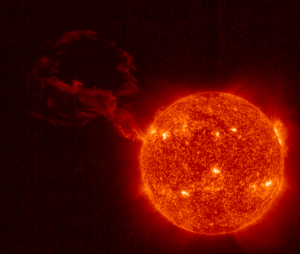
The Sun is currently in a quiet period of its activity; the next activity maximum is expected in about five years, but a strong solar storm can occur at any time, and not necessarily at the peak of the solar activity cycle.
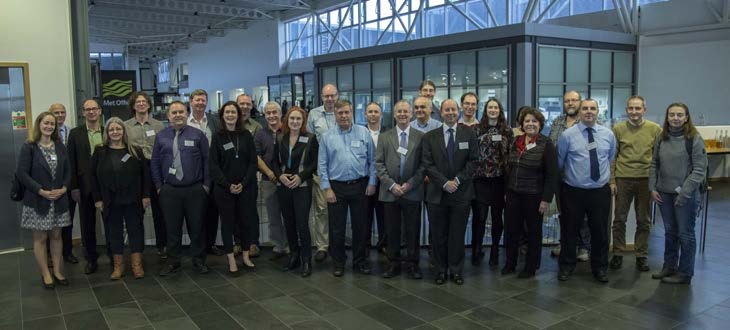
Scientists and representatives from industrial sectors potentially affected by the effects of "space weather" met at the UK Met Office to discuss how the FLARECAST solar flare forecasting system should be built to best serve user needs.
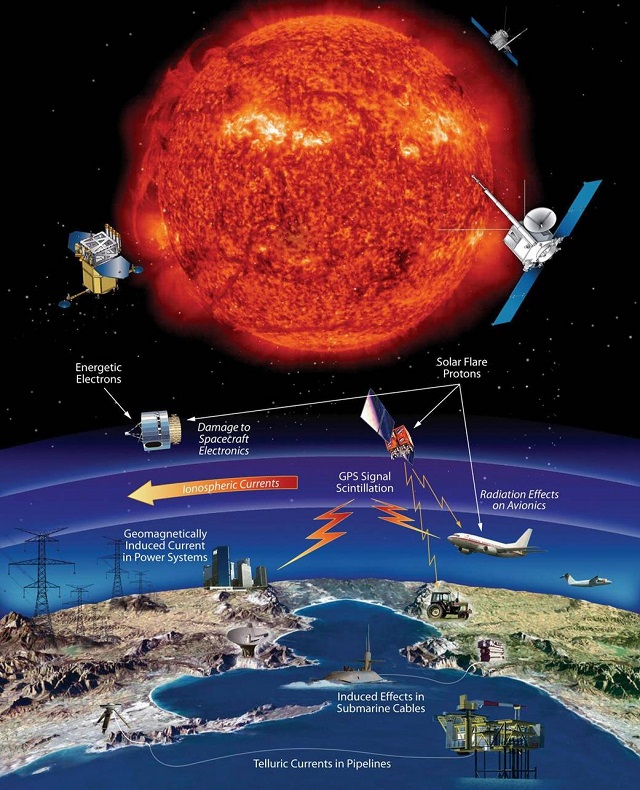
In mid-January, representatives from satellite operators, civil aviation companies, defense agencies, and government organizations met at the UK Met Office in Exeter with scientists from the European FLARECAST project from Greece, Ireland, France, Italy, Switzerland, and Great Britain (the UK Met Office is one of the partners in the FLARECAST project). Together, they worked on the future FLARECAST solar flare forecasting system, bridging recent scientific and technological advancements in flare forecasting with user requirements. The goal is to be better prepared for the next major solar storm! "Establishing a dialogue between scientists and users is necessary in this field," says Nicole Vilmer from the Observatoire de Paris and CNRS. "This is a long-term endeavor that requires significant effort from both communities, but it is beginning to yield results." "The question is not whether a major flare will occur, but when it will occur," says Manolis Georgoulis, coordinator of the European FLARECAST project. "And no one can predict its exact magnitude!" We are becoming increasingly dependent on space-based technologies. Consequently, we are increasingly vulnerable to the effects of solar storms and space weather conditions. This is the case, for example, with the use of GPS, radar, and radio communications. "We may be more affected by the effects of solar flares than we realize, because the impacts of these storms on technological systems are very often not made public," says Sophie Murray from Trinity College Dublin.
There is therefore a need not only to produce space weather forecasts, but also to continuously monitor the effects on the Earth's space environment. Several governments have already included risks associated with space weather conditions in their natural disaster registers. However, coherent risk prevention and mitigation plans are still lacking. One of the crucial prerequisites for establishing these strategies is the realization of a reliable flare forecasting system so that protective measures for assets in space and on Earth can be taken in a timely manner. The objective of FLARECAST is precisely to develop such a forecasting system.
IAS is participating in the project by providing the computing infrastructure and space observation data upon which the system is based, as part of the MEDOC data and operations center (CNES/INSU/Univ. Paris-Sud).